Understanding Altcoins: Types & Market Potential 2026
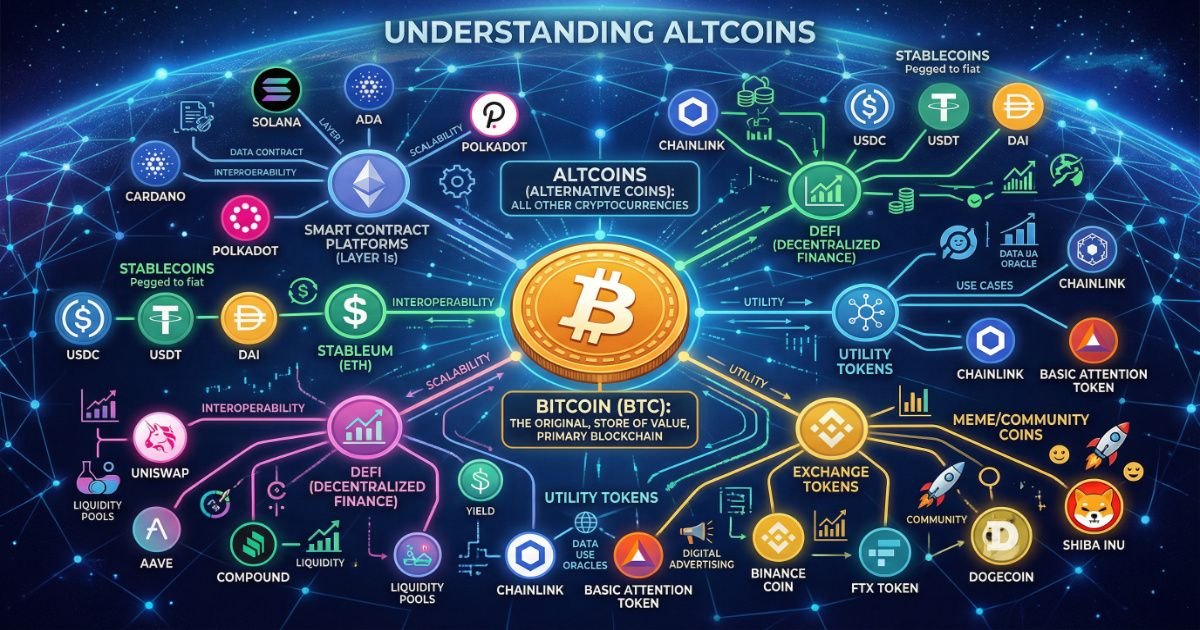
The world of cryptocurrency has evolved far beyond just Bitcoin. As we step into January 2026, the concept of understanding altcoins has become essential for anyone interested in digital assets, blockchain innovation, or decentralized finance. Altcoins, short for “alternative coins,” represent every cryptocurrency other than Bitcoin, and they play a crucial role in shaping the future of the digital economy.
Over the past few years, altcoins have transformed from experimental projects into powerful financial tools with real-world applications. From powering decentralized applications to enabling faster transactions and supporting new financial ecosystems, these digital currencies have gained massive popularity among investors and developers alike.
In this comprehensive guide, we will explore the types of altcoins, their key benefits, and their market potential in 2026. Whether you’re a beginner or an experienced investor, this article will help you gain a deeper understanding of altcoins and how they fit into the broader crypto landscape.
What Are Altcoins?
Altcoins are all cryptocurrencies other than Bitcoin. While Bitcoin remains the first and most dominant cryptocurrency, altcoins aim to improve upon its limitations or serve entirely different purposes. Understanding altcoins means recognizing their diversity and innovation.
Some altcoins are designed to offer faster transaction speeds, while others focus on privacy, scalability, or smart contract functionality. Many projects are built on advanced blockchain technology, enabling developers to create decentralized applications, financial systems, and even virtual worlds.
The rise of altcoins has expanded the crypto ecosystem significantly. Today, thousands of altcoins exist, each with its own use case, technology, and market value. This diversity is what makes understanding altcoins both exciting and essential for investors.
Types of Altcoins in 2026
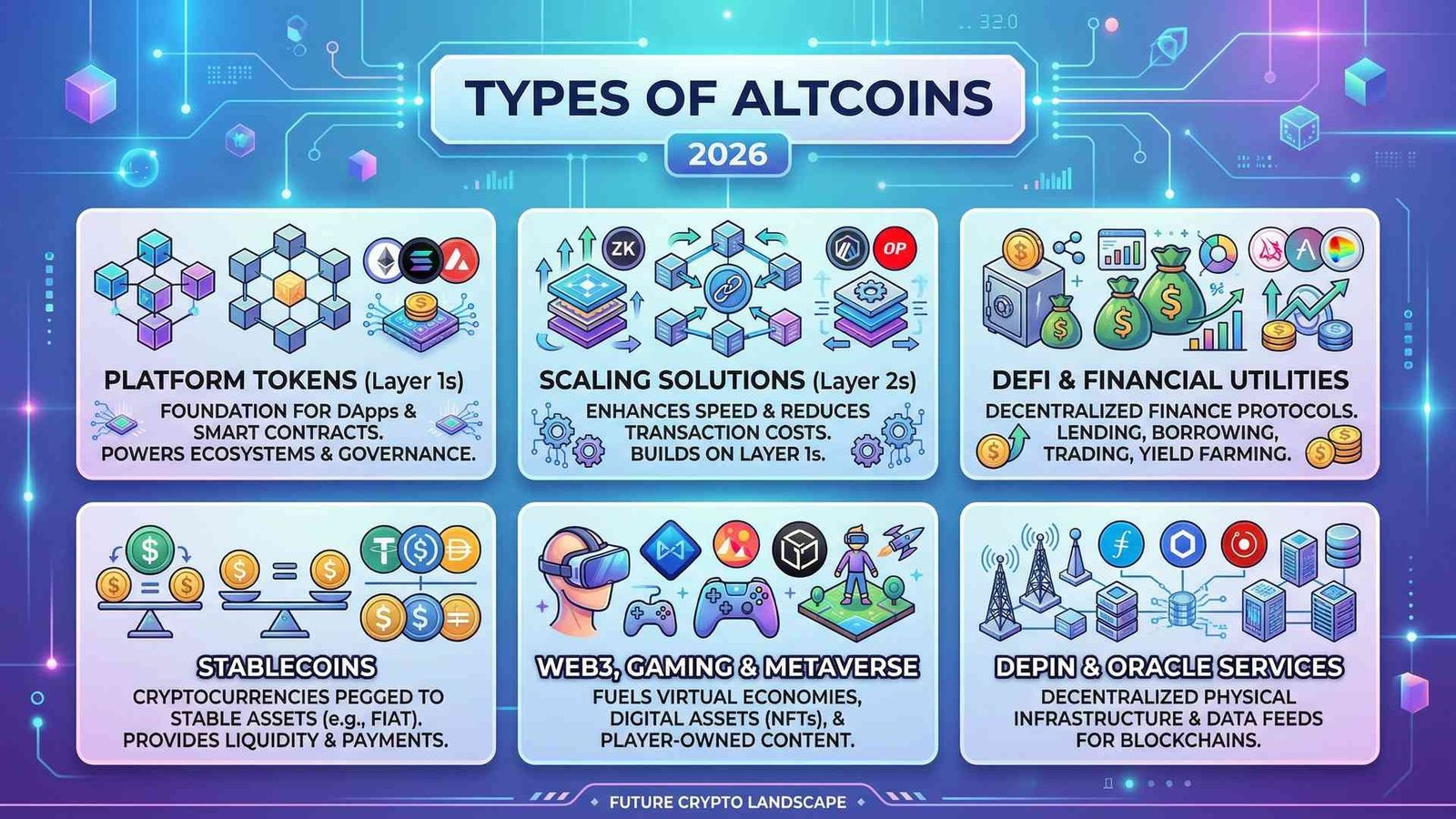
Utility Tokens
Utility tokens are among the most common types of altcoins. These tokens provide access to specific services or platforms within a blockchain ecosystem. For example, users may need a utility token to pay transaction fees or access premium features.
In 2026, utility tokens have become more sophisticated, powering decentralized applications and enabling seamless interactions within blockchain networks. Understanding altcoins in this category helps investors identify projects with real-world use cases.
Stablecoins
Stablecoins are designed to maintain a stable value by being pegged to assets like fiat currencies or commodities. They play a critical role in reducing volatility within the crypto market.
As the demand for stability grows, stablecoins have become essential for trading, lending, and payments. They are widely used in decentralized finance, making them a cornerstone of the altcoin ecosystem.
Security Tokens
Security tokens represent ownership in real-world assets such as stocks, real estate, or companies. These tokens are regulated and provide investors with rights similar to traditional securities.
Understanding altcoins in the form of security tokens is important because they bridge the gap between traditional finance and blockchain technology.
Governance Tokens
Governance tokens give holders the power to vote on decisions within a blockchain project. This includes changes to protocols, upgrades, and fund allocation.
In 2026, governance tokens have become a symbol of decentralization, allowing communities to control the future of their projects. This makes them a key component of understanding altcoins.
Meme Coins and Community Tokens
Meme coins started as jokes but have evolved into powerful community-driven assets. While they are often volatile, their popularity cannot be ignored.
Understanding altcoins also means recognizing the influence of community sentiment and social media in driving market trends.
Benefits of Altcoins
Innovation and Technological Advancement
One of the biggest advantages of altcoins is their ability to drive innovation. Unlike Bitcoin, which primarily focuses on being a store of value, altcoins explore new technologies such as smart contracts, decentralized finance, and non-fungible tokens.This constant innovation is why understanding altcoins is crucial for staying ahead in the crypto space.
Diversification Opportunities
Altcoins provide investors with the opportunity to diversify their portfolios. Instead of relying solely on Bitcoin, investors can spread their investments across multiple projects with different use cases.
Diversification reduces risk and increases the potential for higher returns, making altcoins an attractive option for both beginners and experienced traders.
Faster Transactions and Lower Fees
Many altcoins are designed to address Bitcoin’s limitations, particularly in terms of transaction speed and cost. In 2026, several altcoins offer near-instant transactions with minimal fees.This makes them ideal for everyday use, including payments and remittances.
Accessibility and Financial Inclusion
Altcoins have played a significant role in promoting financial inclusion. By eliminating the need for traditional banking systems, they provide access to financial services for people around the world.Understanding altcoins highlights their potential to empower individuals in underserved regions.
Decentralization and Transparency
Altcoins operate on decentralized networks, ensuring transparency and security. Transactions are recorded on public ledgers, making them tamper-proof and verifiable.This level of transparency builds trust and reduces the risk of fraud.
Market Potential of Altcoins in January 2026
Growing Adoption
The adoption of altcoins continues to rise as more businesses and individuals embrace cryptocurrency. From online payments to decentralized finance, altcoins are being integrated into various industries.
Understanding altcoins in 2026 means recognizing their expanding role in the global economy.
Institutional Interest
Institutional investors have shown increasing interest in altcoins. Large financial institutions are now exploring blockchain technology and investing in promising projects.
This trend has boosted the credibility and market value of altcoins, making them a key part of the crypto market.
DeFi and Web3 Expansion
The growth of decentralized finance (DeFi) and Web3 has significantly increased the demand for altcoins. These ecosystems rely heavily on altcoins for transactions, governance, and liquidity.
As these sectors continue to expand, the importance of understanding altcoins becomes even more evident.
Emerging Trends in 2026
In January 2026, several trends are shaping the altcoin market. These include the rise of AI-powered blockchain projects, increased focus on sustainability, and the development of scalable solutions.
Understanding altcoins involves staying updated with these trends and identifying projects with long-term potential.
Market Risks and Volatility
While altcoins offer great opportunities, they also come with risks. The market is highly volatile, and prices can fluctuate rapidly.
Investors must conduct thorough research and understand the risks before investing. This is a key aspect of understanding altcoins and making informed decisions.
How to Choose the Right Altcoins
Research and Analysis
Choosing the right altcoin requires careful research. Investors should evaluate the project’s technology, team, and use case.
Understanding altcoins involves analyzing whitepapers, roadmaps, and community support.
Market Trends
Keeping an eye on market trends can help identify promising altcoins. Factors such as adoption rate, partnerships, and innovation play a crucial role.
Risk Management
Investors should never invest more than they can afford to lose. Diversification and risk management are essential strategies for navigating the altcoin market.
Future Outlook of Altcoins
The future of altcoins looks promising as blockchain technology continues to evolve. With increasing adoption, innovation, and institutional support, altcoins are expected to play a major role in the financial system.
Understanding altcoins in 2026 means recognizing their potential to disrupt traditional industries and create new opportunities for growth.
Conclusion
In January 2026, understanding altcoins is more important than ever. These digital assets have grown beyond simple alternatives to Bitcoin and now represent a diverse and dynamic ecosystem.
From different types of altcoins to their numerous benefits and growing market potential, it is clear that altcoins are shaping the future of finance. However, with great opportunities come risks, and investors must approach the market with caution and knowledge.
By staying informed and conducting thorough research, anyone can take advantage of the opportunities presented by altcoins while minimizing potential risks.
FAQs
1. What are altcoins in simple terms?
Altcoins are all cryptocurrencies other than Bitcoin, each designed with unique features and purposes.
2. Are altcoins a good investment in 2026?
Altcoins can be profitable but are highly volatile. Proper research and risk management are essential.
3. What is the difference between Bitcoin and altcoins?
Bitcoin is the first cryptocurrency, while altcoins are alternatives that often improve upon its features or serve different purposes.
4. Which type of altcoin is the safest?
Stablecoins are generally considered safer due to their price stability, but they still carry risks.
5. How can beginners start investing in altcoins?
Beginners should start by learning about the market, choosing reliable exchanges, and investing small amounts while gaining experience.

Post Comment