DeFi 2026: Latest January Updates & Decentralized Finance News
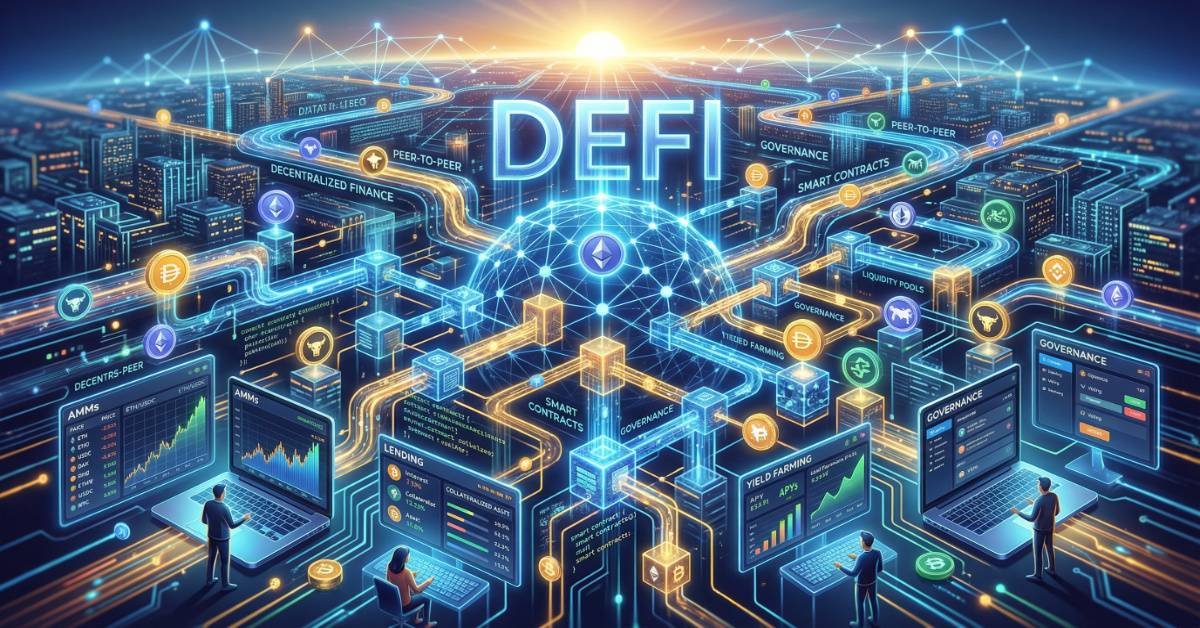
In early January 2026, the Decentralized Finance (DeFi) landscape continued to evolve rapidly, driven by technological progress, regulatory developments, institutional engagements, ecosystem risks, and macro market trends that are reshaping how users and financial institutions view digital finance. DeFi, the ecosystem powering lending, borrowing, trading, and decentralized applications outside traditional banking infrastructure, is at a crossroads of innovation and regulatory scrutiny — with January marking significant newsworthy events. In this detailed article, we cover the most impactful DeFi developments from January 2026, offering insights into the current state of decentralized finance, associated risks, growth trajectories, institutional interest, and legislative updates that are shaping this sector’s future.
Throughout the article, we’ll include related DeFi news, explain key trends like DeFi hacks, institutional participation, regulatory reforms, and yield-bearing products, and help you understand the direction decentralized finance is headed this year with detailed contextual explanation.
What Is DeFi? The Foundation of Decentralized Finance
DeFi — short for Decentralized Finance — refers to financial applications and services built on blockchain technology that remove the need for traditional intermediaries like banks, brokerages, and institutions. At its core, DeFi leverages smart contracts — self-executing programs on blockchain networks — to facilitate peer-to-peer financial activities such as lending, borrowing, trading, and earning interest, often with greater transparency and accessibility than conventional finance. DeFi represents a paradigm shift from centralized systems, democratizing access to financial tools while presenting both opportunities and risks for participants.
January 2026 reinforced the DeFi narrative as not just an experiment but an increasingly serious component of digital finance globally.
Major DeFi News in January 2026
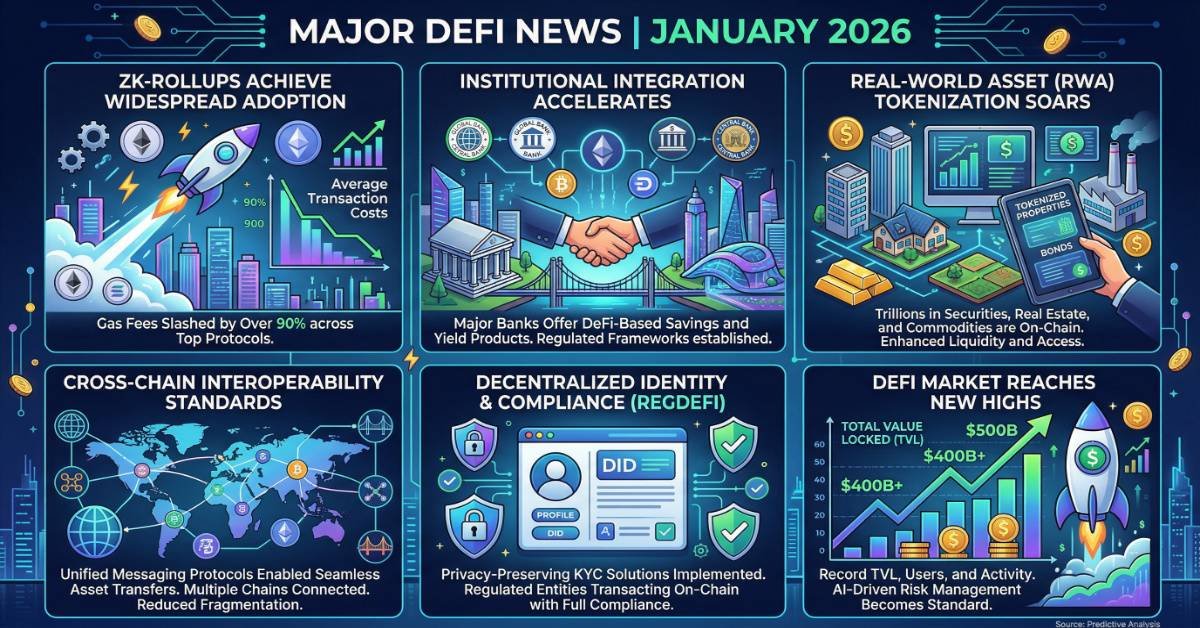
1. Regulatory Shifts and Policy Debates in DeFi
One of the most significant threads this January was the intense regulatory activity around digital assets and decentralized markets. In the United States, the Senate Banking Committee released a new amended draft of the “Digital Asset Market Clarity Act,” aiming to clarify crypto market structure and potentially redefine how decentralized markets fit within federal oversight.
DeFi leaders and industry advocates responded to these reforms with concern, particularly around how DeFi needs and red line demands may be unmet in the current structure bill. Industry participants suggested that unless decentralized financial markets receive tailored regulatory principles, there could be a reluctance to fully embrace or engage with U.S. markets.
Adding to the regulatory considerations, a notable event involved a major market player, Coinbase, retracting its support for the CLARITY Act amid changes to the proposed reform, illustrating the unsettled nature of U.S. crypto policy — which could shape DeFi innovation and compliance strategies.
Regulatory clarity remains a core theme for DeFi’s maturation, as lawmakers and industry stakeholders debate how decentralized systems should be treated under securities and commodities laws.
2. Institutional Adoption and Market Integration
January 2026 showed further signs that institutional interest in DeFi is gaining traction. DeFi Technologies announced that Valour — its exchange-traded product (ETP) — received regulatory approval in the United Kingdom and began offering select yield-bearing crypto ETPs to retail investors via the London Stock Exchange starting January 26. This move represents a broader bridging of DeFi yield opportunities and mainstream financial markets.
Such moves toward regulated investment products that mimic DeFi-like yield — offering annualized returns while operating within compliance frameworks — may pave the way for broader investor participation and capital inflows into decentralized markets.
3. DeFi Network & Protocol Developments
Protocol-level advancements and ecosystem discussions also marked January. DeFi Development Corp. released a recap of its January 2026 highlights, focusing on expanding Solana-first treasury strategies, new yield partnerships, governance strengthening, and a UK revolving credit facility. These moves demonstrate how protocols are maturing with both infrastructure expansions and yield-oriented growth.
Additionally, Hemi hosted an X Space event on January 27 emphasizing institutional participation in Bitcoin DeFi infrastructure, underlining continued discourse around integrating Bitcoin-focused products into the DeFi sphere.
4.Market Volume Trends and Growth Signals
A notable trend was the rise in DeFi spot trading volume since the start of 2026, with data showing increasing shares of decentralized exchange (DEX) activity versus centralized exchange flows, alongside stablecoin movements indicating active user participation. These trends point to a dynamic DeFi market where liquidity and trading activity are gaining momentum.
5. Security Risks and DeFi Exploits
Despite positive growth signals, security risks continued to plague DeFi in 2026. By late March, exploits and vulnerabilities resulted in over $137 million in losses from hacks on platforms such as Step Finance, Truebit, and Resolv — reiterating that while DeFi innovation grows, risks related to smart contract bugs and exploits remain a persistent and serious concern.
These attacks highlight the ongoing need for improved audits, security practices, and risk mitigation strategies within the decentralized finance space.
Deep Dive: DeFi Lending & Market Structures in 2026

The DeFi ecosystem is diverse: from lending and borrowing protocols to yield farms and liquidity pools, each component plays a crucial role. According to industry insights, the DeFi market valuation in early 2026 approached nearly $239 billion, with lending and borrowing sectors holding more than a quarter of total market share. Lending protocols such as Aave, Kamino Finance, and others have introduced structural innovations, such as modular architectures and risk isolation mechanisms, to mitigate systemic risk and attract more capital.
Protocols are shifting away from older monolithic models toward more modular designs, improving scalability and strengthening liquidity hub models that appeal to institutions and advanced users alike.
Moreover, decentralized lending remains in a high-leverage regime, with active loans maintaining relatively high balances across multiple quarters — demonstrating sustained confidence in DeFi credit markets.
Challenges & Risks Influencing DeFi Growth
While DeFi adoption continues, several challenges restrain its broader acceptance:
- Many founders and developers face significant pressure due to asymmetric risk environments. The expectation to bring innovative financial infrastructure to market under adversarial conditions can hamper long-term sustainability for startups.
- Security vulnerabilities and exploits remain key systemic risks, as high-profile hacks in early 2026 remind investors that decentralized protocols require robust protections.
- Regulatory uncertainty — especially in critical markets such as the U.S. — remains a barrier to institutional certainty and capital deployment.
The Road Ahead: What DeFi Holds in 2026
Looking forward beyond January 2026, several dynamics suggest how the decentralized finance landscape could unfold:
- Regulatory clarity may either accelerate or slow innovation, depending on how lawmakers balance consumer protection with fostering growth. Market participants are watching reforms like the CLARITY Act and U.S. legislative proposals closely.
- Institutional participation — through regulated products and yield-bearing instruments — is likely to grow, bridging the gap between traditional finance and DeFi ecosystems.
- Innovations in security, composability, and risk framework models will shape DeFi’s appeal to both retail and professional investors.
Together, these forces will determine whether DeFi climbs toward broader mainstream inclusion or remains a specialized niche within the broader crypto ecosystem.
Conclusion:
The DeFi landscape in January 2026 showed potent signs of growth and maturation. From regulatory debates and institutional adoption to rising trading volumes and infrastructure developments, decentralized finance continues to evolve in response to market demands, security challenges, and legislative pressures. While substantial opportunities lie ahead, including increased institutional involvement and more accessible yield products, risks remain — especially around security and regulatory frameworks.
For participants, staying informed with the latest DeFi news and understanding sector risks will be essential in navigating Decentralized Finance in 2026 and beyond.
Frequently Asked Questions (FAQs)
1. What major DeFi developments happened in January 2026?
In January 2026, key developments included regulatory debates around U.S. crypto market structure, institutional adoption via yield-bearing ETPs in the UK, rising DeFi spot trading volumes, and ongoing security vulnerabilities on major protocols.
2. Is institutional interest growing in DeFi this year?
Yes — institutions are increasingly engaging with DeFi through regulated products and strategic partnerships, indicating a bridging between traditional finance and decentralized markets.
3. What are the main risks facing DeFi today?
Security vulnerabilities and regulatory uncertainty remain the biggest risks for DeFi, as exploits continue to result in significant capital losses and lawmakers grapple with appropriate frameworks for regulation.
4. Did DeFi lending grow in early 2026?
DeFi lending maintained elevated loan balances, suggesting strong ongoing demand for decentralized credit markets and evolving risk structures tailored for scalability.
5. How does regulation affect DeFi innovation?
Regulatory activity can either support DeFi by clarifying legal frameworks and encouraging institutional participation, or it can slow adoption if compliance burdens are too restrictive or unclear.

Post Comment