Directed Acyclic Graph Vs Blockchain: Key Differences Explained
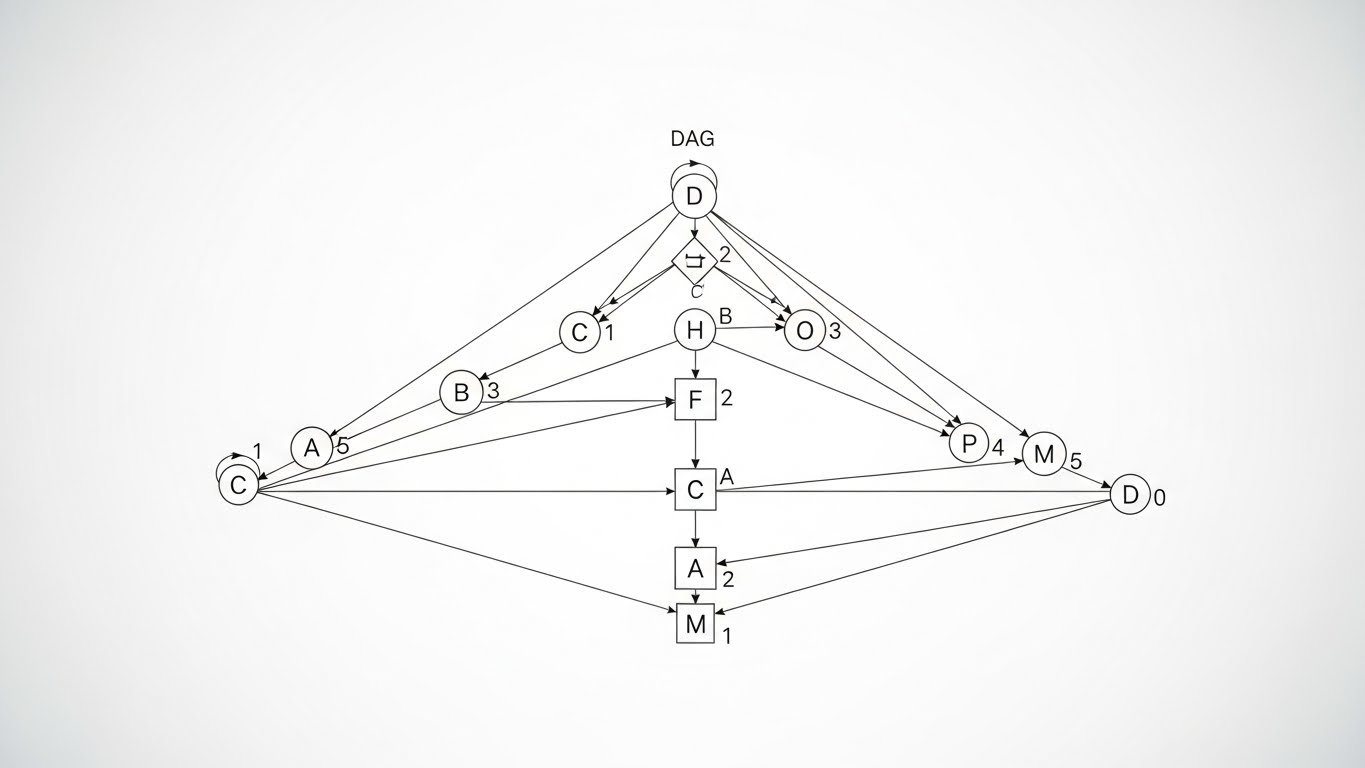
The rise of digital currencies and decentralized systems has brought forward two revolutionary technologies: Blockchain and Directed Acyclic Graph (DAG). Both are distributed ledger technologies, yet they differ fundamentally in structure, efficiency, and scalability. As cryptocurrency adoption increases and industries explore decentralized solutions, understanding the distinction between DAG vs Blockchain technology becomes crucial for investors, developers, and businesses.
While blockchain has dominated headlines for over a decade, DAG-based systems are gaining attention for their potential to solve scalability and transaction speed issues. In this comprehensive guide, we explore how Directed Acyclic Graphs (DAGs) differ from blockchain technology, their advantages, limitations, and practical use cases.
What is Blockchain Technology?
Blockchain technology is the foundation of cryptocurrencies like Bitcoin and Ethereum. It is a distributed ledger system where transactions are recorded in blocks, which are then linked sequentially in a chain. This structure ensures that data is immutable, transparent, and secure, making it ideal for financial transactions and other applications requiring trust without intermediaries.
Each block contains transaction data, a timestamp, and a cryptographic hash of the previous block, creating a continuous chain that is resistant to tampering. Blockchain networks rely on consensus mechanisms such as Proof of Work (PoW) or Proof of Stake (PoS) to validate transactions.
The advantages of blockchain include high security, decentralization, and auditability. However, blockchain networks often face challenges such as slow transaction speeds, high fees during congestion, and energy-intensive consensus protocols. This limitation has paved the way for alternative technologies like Directed Acyclic Graphs (DAGs).
The Directed Acyclic Graph (DAG)
Directed Acyclic Graph (DAG) is an alternative distributed ledger structure that differs significantly from blockchain. Unlike the linear chain structure of blockchain, a DAG is a graph-based network where transactions are linked in a web-like manner. Each new transaction verifies one or more previous transactions, creating a network of interconnected data.
This design allows DAG-based systems to achieve higher scalability, faster transaction speeds, and reduced fees. DAG networks, such as IOTA, Nano, and Hedera Hashgraph, are particularly suited for Internet of Things (IoT) applications and microtransactions due to their lightweight and efficient nature.
Unlike blockchain, DAG does not require mining or traditional consensus mechanisms, making it energy-efficient and capable of handling a high volume of transactions simultaneously. However, DAGs may face challenges in terms of network security and achieving full decentralization in some implementations.
Structural Differences Between DAG and Blockchain
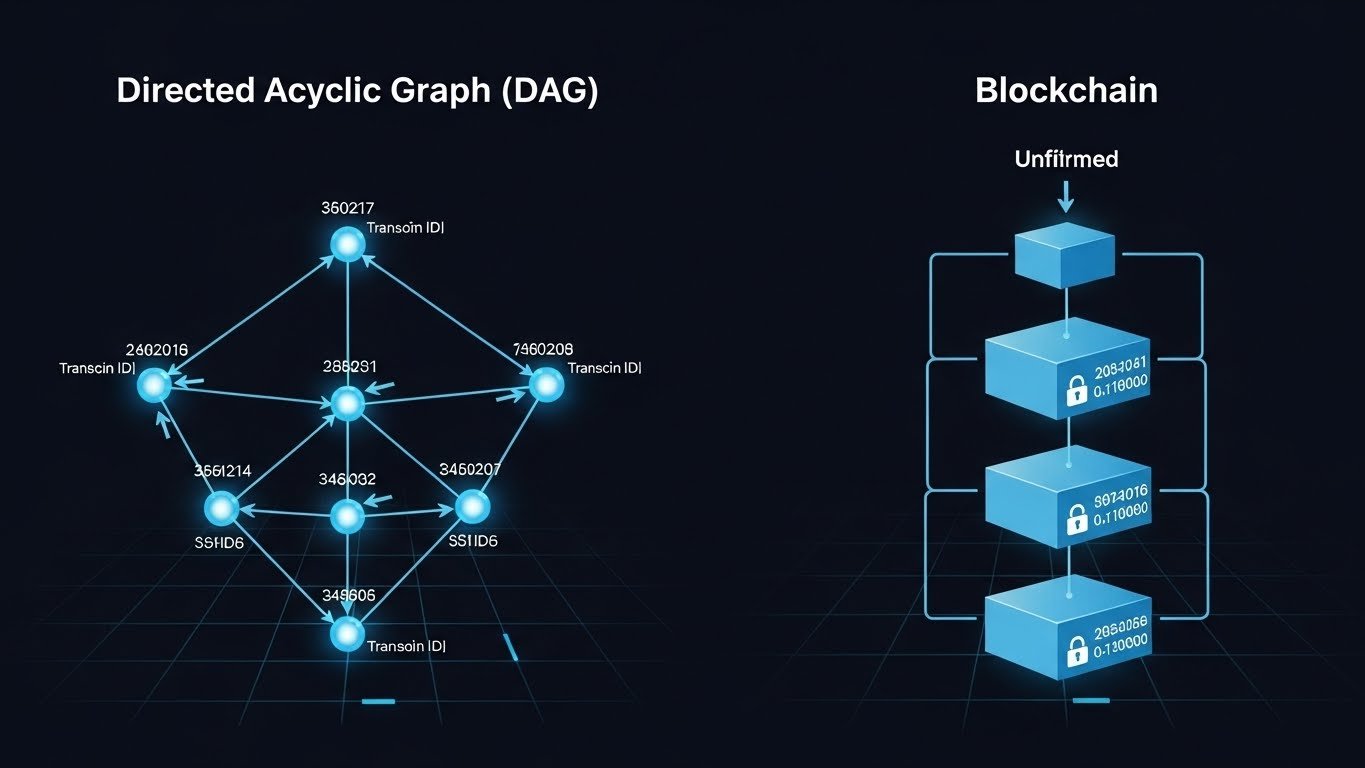
The structure of a distributed ledger significantly impacts its performance, security, and scalability. In blockchain technology, transactions are grouped into blocks and linked sequentially, forming a single, immutable chain. Any alteration in a previous block requires recalculating all subsequent blocks, which makes blockchain highly secure but relatively slow.
In contrast, DAG architecture allows multiple transactions to occur in parallel. Each transaction verifies previous transactions, creating a directed graph without loops. This design eliminates the need for miners and enables near-instant transaction confirmations. DAG’s structure inherently supports asynchronous processing, which reduces congestion and enables massive scalability, making it ideal for networks handling millions of transactions per second.
Consensus Mechanisms: Blockchain vs DAG
A major difference between DAG and blockchain technology lies in their consensus methods. Blockchain networks rely on Proof of Work (PoW) or Proof of Stake (PoS) to achieve agreement across the network. While these methods ensure security and decentralization, they can be slow and energy-intensive, limiting transaction throughput.
DAG-based networks, on the other hand, do not rely on traditional mining. Transactions validate each other through mechanisms like coordinators, tangles, or virtual voting, depending on the specific DAG implementation. This allows DAG systems to achieve fast finality, lower fees, and better scalability while maintaining a reasonable level of security.
However, DAG networks may face challenges in ensuring decentralization and preventing double-spending attacks, especially in low-traffic environments where fewer transactions are available for verification.
Transaction Speed and Scalability
When comparing DAG vs blockchain, transaction speed and scalability are critical factors. Blockchain networks, particularly those using PoW, can only process a limited number of transactions per second (TPS). For example, Bitcoin handles around 7 TPS, and Ethereum averages 15–30 TPS, which can lead to congestion and high fees during peak usage.
DAG-based networks, however, can process thousands of transactions per second, thanks to their parallel processing capabilities. As more transactions are added, the network can become even faster, which is the opposite of blockchain behavior, where congestion slows down the system. This makes DAG suitable for microtransactions, IoT networks, and applications requiring high-speed data processing.
Security Comparison
Security is a core consideration in choosing between DAG and blockchain technology. Blockchain’s linear chain structure and cryptographic hashing provide strong immutability and protection against tampering. Once a block is confirmed, it is nearly impossible to alter without controlling a majority of the network’s computational power.
DAG networks secure transactions through interlinked verification, but the level of security depends on network activity. High transaction throughput enhances security, while low activity may expose the network to attacks. Certain DAG implementations use additional security measures, such as checkpoints or coordinator nodes, to prevent malicious behavior.
In summary, while blockchain is more battle-tested for security, DAG offers comparable safety with the added benefit of speed and efficiency under the right conditions.
Use Cases of Blockchain
Blockchain technology has wide-ranging applications beyond cryptocurrencies. Financial services, supply chain management, healthcare, voting systems, and digital identity verification have all leveraged blockchain’s transparency and immutability. Smart contract platforms like Ethereum have further expanded its use into decentralized finance (DeFi), non-fungible tokens (NFTs), and enterprise solutions.
Despite scalability challenges, blockchain remains the go-to choice for applications where security, transparency, and decentralization are top priorities.
Use Cases of Directed Acyclic Graph (DAG)
DAG technology excels in scenarios requiring high-speed, low-cost transactions. Its key applications include IoT networks, microtransactions, and real-time data transfers. DAG-based platforms such as IOTA are designed specifically for machine-to-machine (M2M) communication, enabling devices to transact autonomously without congestion or high fees.
Additionally, DAG networks are being explored for supply chain tracking, healthcare data sharing, and scalable decentralized applications, particularly where traditional blockchain networks may struggle due to transaction volume or latency.
Advantages and Limitations
Advantages of Blockchain:
- High security and immutability
- Decentralization and transparency
- Wide adoption and developer community support
Limitations of Blockchain:
- Limited scalability and slower transaction speeds
- High energy consumption in PoW networks
- High transaction fees during congestion
Advantages of DAG:
- High scalability and fast transaction processing
- Low or no transaction fees
- Energy-efficient and environmentally friendly
Limitations of DAG:
- Relatively new and less tested
- Security may depend on transaction volume
- Some implementations are partially centralized
Which Technology is Better: DAG or Blockchain?
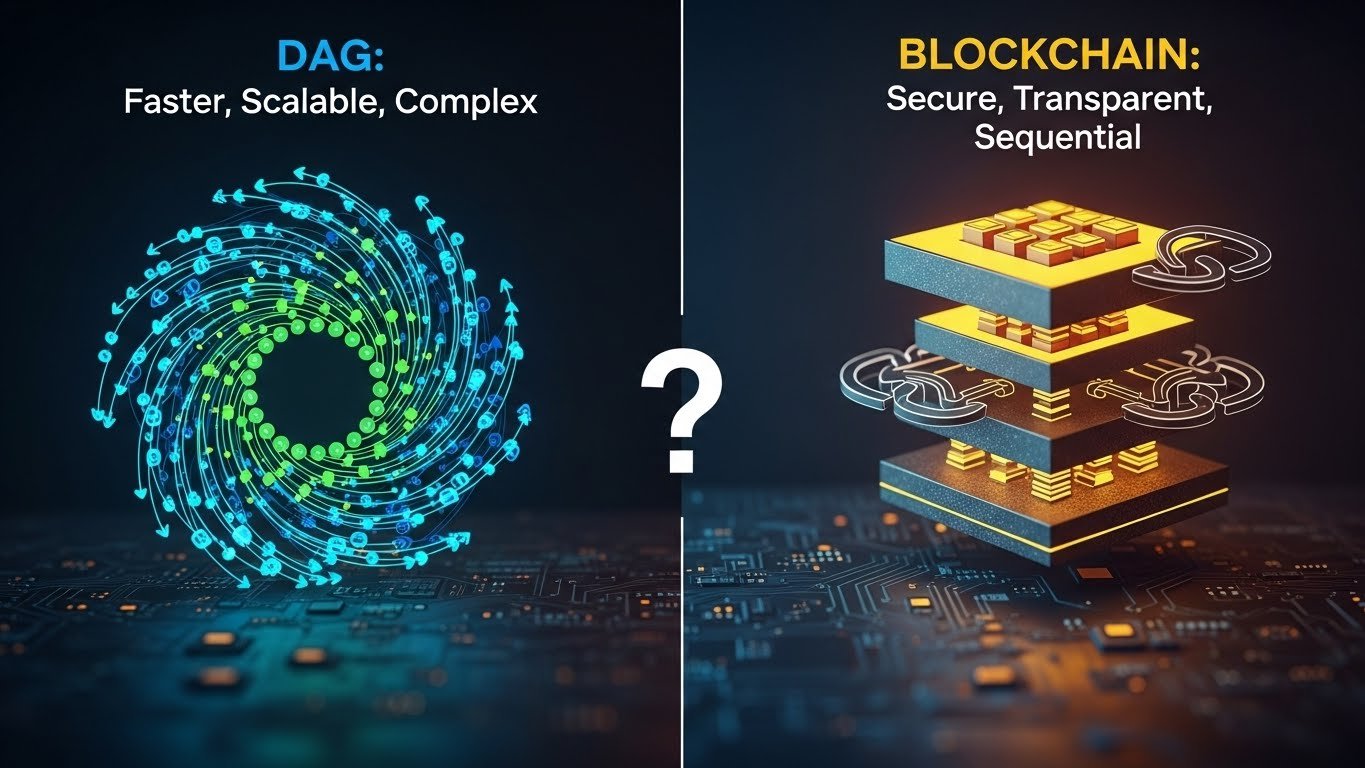
The choice between DAG and blockchain depends on the use case. Blockchain is ideal for secure, immutable, and decentralized systems, while DAG excels in high-speed, scalable environments. For financial systems requiring strong security and auditability, blockchain remains the preferred option. In contrast, IoT applications and microtransactions benefit more from DAG’s efficiency and speed.
Both technologies are evolving rapidly, and hybrid solutions are emerging, combining the strengths of blockchain and DAG to meet the growing demands of decentralized applications.
Conclusion
The comparison between Directed Acyclic Graph (DAG) and blockchain technology highlights the unique strengths and limitations of each. Blockchain offers robust security, transparency, and decentralization but faces scalability and speed challenges. DAG provides a scalable, fast, and energy-efficient alternative, suitable for high-throughput environments like IoT and microtransactions.
As the digital ecosystem expands, understanding these technologies is essential for developers, businesses, and investors looking to leverage decentralized solutions. Both DAG and blockchain will play critical roles in shaping the future of distributed ledger technology, each catering to different needs and applications.
FAQs
1. What is the main difference between DAG and blockchain?
The main difference lies in structure. Blockchain uses a linear chain of blocks, while DAG uses a graph-like structure allowing parallel transaction verification.
2. Which is faster: DAG or blockchain?
DAG is generally faster due to parallel transaction processing, whereas blockchain’s linear structure and consensus mechanisms can slow down transactions.
3. Is DAG more secure than blockchain?
Blockchain is more battle-tested and secure, but DAG can achieve strong security in high-traffic networks with additional safeguards.
4. What are common applications of DAG technology?
DAG is ideal for IoT networks, microtransactions, real-time data transfer, and scalable decentralized applications.
5. Can blockchain and DAG be used together?
Yes, hybrid models are emerging that combine blockchain’s security and DAG’s speed to optimize decentralized systems for specific applications.


Post Comment