AI & Web3: The Future of Decentralized Intelligence
The landscape of digital technology is evolving at an unprecedented pace, and at the heart of this transformation lies the integration of AI & Web3. As we approach 2026, industries and individuals alike are witnessing the convergence of artificial intelligence with decentralized networks, creating innovative solutions that were previously considered science fiction. From finance and healthcare to gaming and digital identity, AI & Web3 are reshaping the way data is managed, analyzed, and utilized across the globe.This article explores the intricate relationship between AI & Web3, highlighting how their synergy is not only enabling smarter systems but also promoting transparency, security, and efficiency. By understanding these dynamics, businesses and tech enthusiasts can better prepare for the next wave of digital innovation.AI, or artificial intelligence, refers to systems capable of performing tasks that traditionally require human intelligence. These tasks include decision-making, natural language understanding, pattern recognition, and predictive analytics. Over the past decade, AI has evolved from basic machine learning algorithms to sophisticated models capable of autonomous reasoning and real-time data analysis.Web3, on the other hand, represents the third generation of the internet. Unlike its predecessor, Web3 focuses on decentralization, blockchain technology, and the empowerment of users. Web3 eliminates centralized control by enabling peer-to-peer interactions, smart contracts, and tokenized ecosystems. This creates a more secure and transparent digital environment.The fusion of AI & Web3 promises a world where intelligent systems operate within decentralized networks, offering unparalleled efficiency, trust, and innovation. Together, these technologies provide a framework for building applications that are not only autonomous but also inherently resistant to censorship and centralized manipulation.
How AI Enhances Web3 Capabilities
Artificial intelligence brings significant enhancements to Web3 ecosystems. Decentralized networks, while secure, often struggle with scalability and real-time decision-making. AI algorithms can analyze blockchain data, optimize consensus mechanisms, and predict network behavior. For example, AI can detect anomalies in decentralized finance (DeFi) platforms, preventing fraud or identifying vulnerabilities before they are exploited.
Moreover, AI can enhance user experiences in decentralized applications (dApps) by providing personalized recommendations, dynamic content, and predictive analytics. By analyzing on-chain behavior, AI ensures that interactions are more intuitive and tailored, bridging the gap between complex decentralized systems and everyday users.
AI-Driven Smart Contracts
Smart contracts are the backbone of Web3, enabling self-executing agreements without intermediaries. By integrating AI, these contracts can evolve from static scripts to adaptive programs. AI-powered smart contracts can automatically adjust terms based on real-time market conditions, user behavior, or predictive outcomes. This ensures that decentralized agreements are not only automated but also intelligent, reducing risks and maximizing efficiency.
For instance, in decentralized insurance, AI can assess claims data in real time, determine legitimacy, and trigger smart contract payouts automatically. This combination of AI & Web3 significantly reduces processing times and human error, offering a truly autonomous ecosystem.
Decentralized AI: Beyond Centralized Models
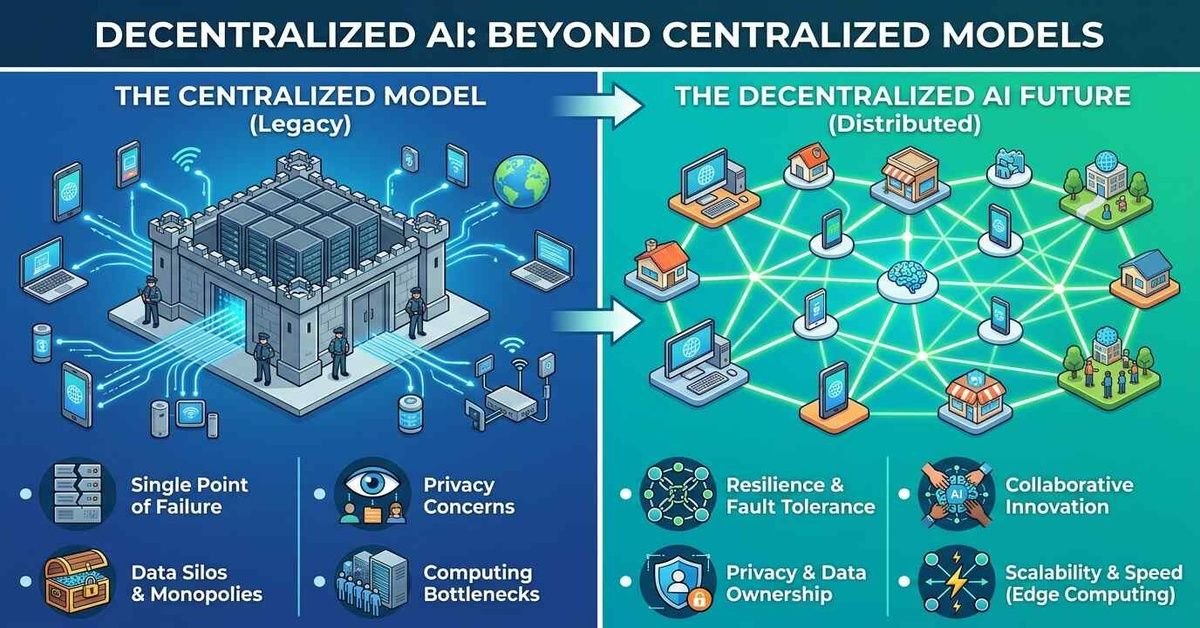
Traditional AI relies heavily on centralized data sources and cloud computing infrastructure. This creates bottlenecks, privacy concerns, and a single point of failure. Decentralized AI leverages Web3 principles to distribute model training and data processing across a network of nodes, ensuring privacy, security, and fairness.
By decentralizing AI, users maintain control over their data while contributing to collective intelligence. Projects in 2026 are exploring federated learning combined with blockchain, where multiple participants can train AI models collaboratively without exposing sensitive information. This paradigm shift ensures that AI is not only more secure but also democratized.
AI in DeFi and Financial Applications
Decentralized finance has been one of the most significant areas where AI & Web3 intersect. AI algorithms can analyze trading patterns, liquidity pools, and lending activities to optimize financial strategies. By integrating predictive analytics, DeFi platforms can offer dynamic interest rates, risk assessments, and automated portfolio management.
For example, AI can identify potential liquidity shortages or market manipulation in real time, enabling decentralized exchanges to respond proactively. This intelligent integration ensures that DeFi ecosystems remain resilient, efficient, and transparent.
The Role of NFTs and AI
Non-fungible tokens (NFTs) have revolutionized digital ownership, creating unique assets in art, gaming, and virtual real estate. When combined with AI, NFTs gain new dimensions of utility. AI-generated art, dynamic NFTs that change based on user interactions, and AI-driven marketplaces are becoming increasingly common.
AI can also enhance NFT valuation by analyzing market trends, user behavior, and scarcity factors. In gaming, AI-powered NFTs can evolve in response to player interactions, creating immersive and personalized experiences. This fusion of AI & Web3 ensures that digital assets are not only tradable but also intelligent and adaptive.
Web3, AI, and Digital Identity
Identity management is a critical challenge in the digital era. Traditional systems often rely on centralized authorities, which are vulnerable to hacks and misuse. Web3 offers decentralized identity solutions where users control their data and credentials. AI further strengthens these systems by verifying authenticity, detecting fraudulent activity, and providing adaptive security measures.
For instance, AI can continuously monitor decentralized identity networks for suspicious patterns, enabling proactive protection. Users benefit from a secure, private, and personalized digital identity, reinforcing trust in decentralized ecosystems.
Challenges in Integrating AI & Web3
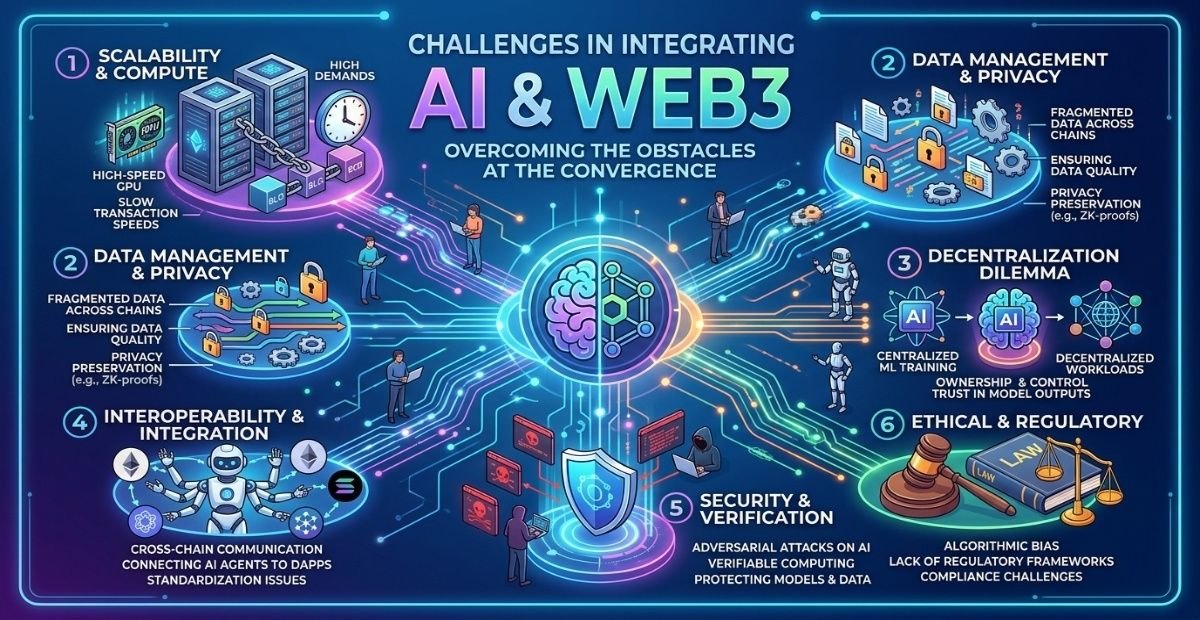
Despite the promise of AI & Web3, several challenges must be addressed. Scalability remains a primary concern, as decentralized networks struggle to handle massive AI computations. The energy consumption of blockchain systems combined with AI model training also raises sustainability questions.
Interoperability is another critical challenge. AI models often rely on standardized datasets, while decentralized networks operate across heterogeneous platforms. Ensuring seamless communication between AI algorithms and Web3 protocols requires innovative solutions.
Additionally, regulatory and ethical considerations cannot be overlooked. AI & Web3 technologies deal with sensitive data and autonomous decision-making. Ensuring transparency, accountability, and compliance will be crucial for widespread adoption in 2026 and beyond.
Future Prospects and Innovations
The future of AI & Web3 is poised for exponential growth. In healthcare, AI-driven decentralized networks could enable secure, collaborative research, real-time diagnostics, and predictive patient care. In supply chain management, AI can optimize decentralized tracking systems, ensuring transparency and efficiency from production to delivery.
Moreover, the combination of AI & Web3 is set to redefine governance models. Decentralized autonomous organizations (DAOs) can leverage AI to analyze member proposals, predict outcomes, and streamline decision-making. This creates more intelligent, fair, and participatory governance structures.
Conclusion
AI & Web3 represent a convergence that is redefining the digital landscape. By integrating intelligent algorithms with decentralized networks, these technologies offer unprecedented opportunities for efficiency, transparency, and user empowerment. As we approach 2026, the synergy between AI & Web3 will continue to shape industries, transform digital interactions, and create smarter, more resilient ecosystems. Organizations and individuals who embrace this integration early will be better positioned to thrive in the next era of technological innovation.
FAQs
1. What is AI & Web3, and why is it important?
AI & Web3 refers to the combination of artificial intelligence and decentralized web technologies. It is important because it enables intelligent decision-making within secure, transparent, and user-controlled networks.
2. How does AI enhance decentralized systems?
AI enhances decentralized systems by analyzing data, optimizing smart contracts, predicting outcomes, and providing personalized user experiences, improving efficiency and security.
3. What industries benefit most from AI & Web3 integration?
Finance, healthcare, gaming, digital art, and identity management are some of the industries that can benefit most from AI & Web3 integration.
4. Are there challenges in using AI & Web3 together?
Yes, challenges include scalability, energy consumption, interoperability, and regulatory compliance. Addressing these is essential for safe and efficient adoption.
5. What does the future hold for AI & Web3?
The future promises intelligent decentralized networks, autonomous smart contracts, dynamic NFTs, AI-powered DAOs, and more secure, user-controlled digital ecosystems.

Post Comment