
As we step into February 2026, the digital world is undergoing a transformative shift powered by two groundbreaking technologies: AI & Web3. These innovations are not just trends but fundamental forces reshaping how we interact with data, systems, and each other. Artificial Intelligence (AI) is revolutionizing automation, decision-making, and predictive analysis, while Web3 is redefining ownership, decentralization, and trust on the internet.
The combination of AI & Web3 is creating a new digital ecosystem where intelligent systems operate on decentralized networks, enabling transparency, efficiency, and user empowerment. Businesses, developers, and everyday users are beginning to experience a more autonomous internet where data is controlled by individuals rather than centralized entities.In this article, we will explore how AI & Web3 are converging, their real-world applications, benefits, challenges, and what the future holds for this powerful technological duo.
AI & Web3
What is Artificial Intelligence?
Artificial Intelligence refers to machines and systems designed to mimic human intelligence. From natural language processing to machine learning algorithms, AI enables systems to analyze data, recognize patterns, and make decisions with minimal human intervention.
In 2026, AI has advanced beyond basic automation. It now plays a critical role in predictive analytics, content generation, cybersecurity, healthcare diagnostics, and financial modeling. AI systems are becoming more adaptive, learning continuously from new data and improving their performance over time.
What is Web3?
Web3 represents the next generation of the internet built on blockchain technology. Unlike Web2, which relies on centralized platforms, Web3 promotes decentralization, transparency, and user ownership.
In the Web3 ecosystem, users control their digital identity, assets, and data. Smart contracts automate transactions without intermediaries, and decentralized applications (dApps) operate on peer-to-peer networks rather than centralized servers.
The Convergence of AI & Web3
The integration of AI & Web3 is where the true innovation lies. AI enhances Web3 by adding intelligence and automation, while Web3 provides AI with decentralized data sources and trustless environments. This synergy allows for: Smarter decentralized applications Automated smart contracts Trustworthy AI models with transparent data sources Enhanced privacy and security
How AI & Web3 Are Transforming Industries
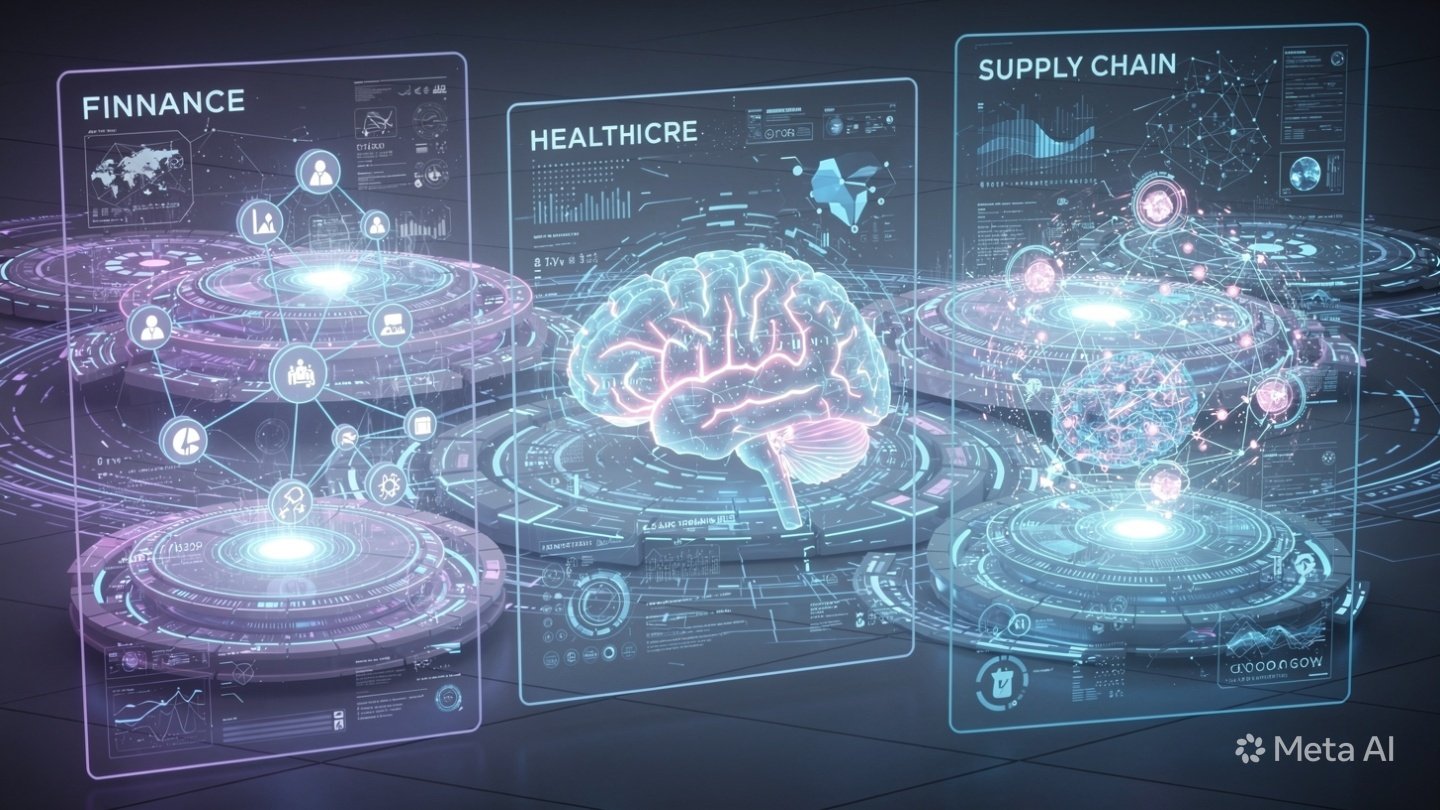
Finance and Decentralized Finance (DeFi)
AI & Web3 are revolutionizing the financial sector through decentralized finance platforms. AI-powered algorithms analyze market trends, manage risk, and optimize trading strategies, while Web3 ensures transparency and removes intermediaries.In 2026, DeFi platforms are more intelligent than ever. AI helps detect fraud, predict price movements, and automate investment decisions. Users can interact with decentralized financial systems that are both secure and highly efficient.
Healthcare Innovation
The combination of AI & Web3 is also transforming healthcare. AI analyzes patient data to provide accurate diagnoses and personalized treatment plans. Meanwhile, Web3 ensures that patient data is stored securely and shared only with authorized parties.Decentralized health records allow patients to maintain control over their medical information while benefiting from AI-driven insights. This leads to improved patient outcomes and reduced healthcare costs.
Digital Identity and Privacy
One of the biggest challenges of the digital age is identity and privacy. AI & Web3 together offer a solution through decentralized identity systems. AI verifies identities using biometric data and behavioral patterns, while Web3 ensures that this data is stored securely without centralized control. Users can access services without exposing sensitive personal information.
Content Creation and Ownership
In 2026, content creation is being reshaped by AI & Web3. AI tools generate high-quality content, including text, images, and videos, while Web3 enables creators to monetize their work directly through NFTs and decentralized platforms.This empowers creators by eliminating middlemen and ensuring fair compensation for their work.
Benefits of AI & Web3 Integration
The integration of Artificial Intelligence (AI) and Web3 has the potential to completely transform the digital world by combining intelligence, automation, decentralization, transparency, and user ownership into a single ecosystem. AI is designed to analyze data, learn from patterns, automate tasks, and make smart decisions, while Web3 is focused on blockchain technology, decentralized networks, digital ownership, and secure peer-to-peer interactions. When these two powerful technologies work together, they create systems that are not only smarter and faster but also more transparent, secure, and user-controlled. One of the biggest benefits of AI and Web3 integration is decentralization. Traditional AI systems are mostly controlled by large companies that own the data, servers, and algorithms. With Web3, AI models and data can be distributed across decentralized networks, reducing dependence on a single authority and giving users greater control over their information. This can help create a fairer internet where users are rewarded for sharing data instead of companies using it without proper ownership or compensation.
Another major advantage is improved security and trust. Blockchain technology in Web3 stores records in a transparent and tamper-resistant manner, making it difficult for hackers or organizations to manipulate data. When AI systems use blockchain networks, their decisions, transactions, and data sources can be verified openly, increasing trust among users. For example, AI-generated content such as images, music, videos, or articles can be verified on the blockchain to prove originality and ownership. This helps reduce problems like fake content, plagiarism, scams, and misinformation. In financial systems, AI-powered Web3 applications can improve fraud detection, automate trading strategies, analyze market risks, and manage decentralized finance (DeFi) platforms more efficiently than traditional systems.
The integration also creates huge opportunities in automation and smart digital services. AI-powered agents can interact with blockchain applications automatically by executing smart contracts, managing crypto wallets, processing payments, or even running online businesses with minimal human involvement. This can save time, reduce costs, and improve efficiency for companies and individuals. In gaming and the metaverse, AI and Web3 together can create intelligent virtual worlds where players truly own their digital assets, characters, and rewards through blockchain technology. AI can also personalize user experiences by understanding preferences and delivering smarter recommendations in decentralized applications.
Another important benefit is data ownership and privacy. In the current internet system, users often lose control of their personal data because centralized platforms collect and store it for profit. Web3 changes this by giving users direct ownership of their digital identity and information through decentralized systems. AI can then analyze this data securely without exposing private details, allowing users to benefit from personalized services while maintaining privacy. This combination may also support decentralized AI marketplaces where developers can share AI models, computing power, and datasets securely across blockchain networks.
Overall, the integration of AI and Web3 represents the future of a smarter, more secure, and more user-focused internet. It can improve industries such as finance, healthcare, education, gaming, cybersecurity, and digital marketing by creating systems that are intelligent, transparent, efficient, and decentralized. Although challenges such as regulation, scalability, and ethical concerns still exist, the combination of AI and Web3 has the potential to reshape the global digital economy and change how people interact with technology in the coming years.
Challenges of AI & Web3
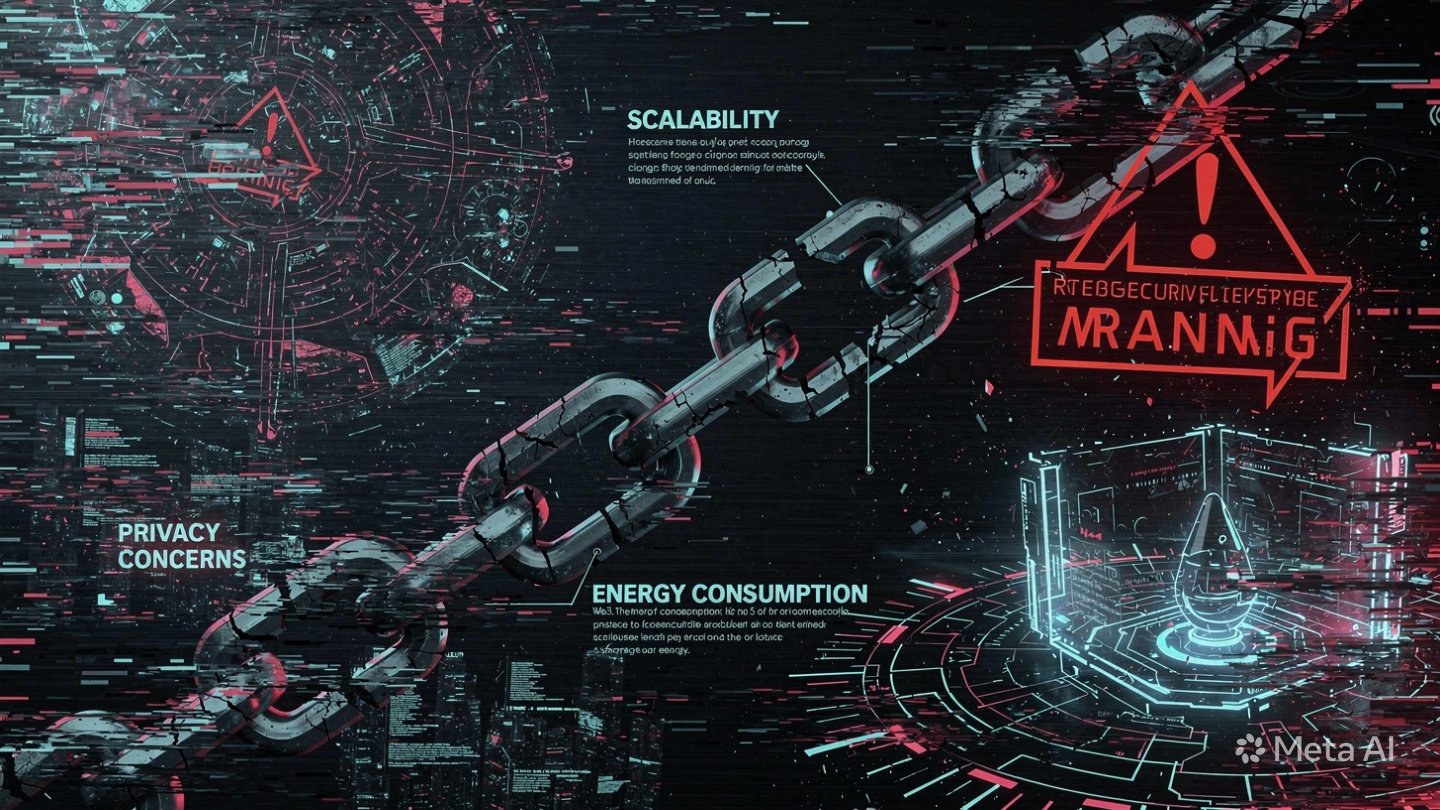
The integration of Artificial Intelligence (AI) and Web3 offers many exciting opportunities, but it also comes with several important challenges. Both technologies are still developing, and combining them creates technical, legal, and ethical difficulties that must be solved before widespread adoption becomes possible. Issues such as scalability, regulation, data quality, security, and bias can affect the performance and trustworthiness of AI and Web3 systems. Developers, researchers, and governments are continuously working to improve these technologies and create safer, faster, and more reliable decentralized ecosystems.
Scalability Issues
One of the biggest challenges facing AI and Web3 is scalability. Blockchain networks are designed to provide decentralization, transparency, and security, but many existing blockchains struggle to process large amounts of transactions quickly and efficiently. Networks can become slow during periods of high activity, and transaction fees may increase significantly. AI systems also require enormous computing power, storage capacity, and fast data processing to function effectively. When AI applications are integrated with blockchain technology, the demand for resources becomes even greater, making scalability a serious concern.
For example, AI-powered decentralized applications may need to analyze huge datasets, execute complex smart contracts, or process thousands of transactions in real time. Traditional blockchain networks may not be capable of handling such workloads efficiently. This can lead to slower application performance, poor user experience, and higher operational costs. To solve these problems, developers are exploring advanced solutions such as layer-2 scaling technologies, sidechains, sharding, and more energy-efficient consensus mechanisms. These innovations aim to increase transaction speed, reduce network congestion, and improve the overall efficiency of AI and Web3 systems. However, achieving large-scale adoption while maintaining decentralization and security remains a major challenge for the industry.
Regulatory Uncertainty
Another major challenge of AI and Web3 integration is regulatory uncertainty. Governments and regulatory authorities around the world are still trying to understand how to manage emerging technologies such as blockchain, cryptocurrencies, decentralized finance (DeFi), and artificial intelligence. Because these technologies are evolving rapidly, laws and regulations often struggle to keep pace with innovation. Different countries also have different approaches toward AI and Web3, creating confusion for businesses, developers, and users operating across international markets.
This uncertainty can slow down innovation and discourage investment because companies may fear future legal restrictions or sudden policy changes. For example, some governments support blockchain innovation, while others impose strict rules on cryptocurrency transactions and decentralized platforms. Similarly, AI technologies raise concerns related to privacy, data misuse, misinformation, and automated decision-making. Without clear legal frameworks, businesses may face difficulties in ensuring compliance and protecting users.
At the same time, completely unrestricted systems can create risks such as scams, fraud, money laundering, and unethical AI practices. Therefore, governments must find a balance between encouraging technological advancement and protecting public interests. Clear and fair regulations are needed to support innovation while ensuring transparency, accountability, security, and consumer protection within AI and Web3 ecosystems.
Data Quality and Bias
Data quality and bias are also critical challenges in AI and Web3 systems. Artificial Intelligence relies heavily on large amounts of accurate and reliable data to learn patterns, make predictions, and perform intelligent tasks. However, in decentralized Web3 environments, data is often collected from multiple independent sources, making it difficult to guarantee consistency, reliability, and accuracy. Poor-quality or manipulated data can reduce the effectiveness of AI systems and lead to incorrect or harmful outcomes.
Bias is another serious concern because AI models can unintentionally learn unfair patterns from the data used to train them. If the training data contains social, cultural, or economic biases, the AI system may produce discriminatory or unfair decisions. In decentralized ecosystems, identifying and correcting these biases becomes even more complex because there is no single authority controlling the data or algorithms. This can create problems in applications related to finance, hiring, healthcare, education, and online content moderation.
To address these issues, developers and researchers are working on creating transparent and explainable AI models that operate fairly within decentralized systems. Blockchain technology may help improve transparency by recording how data is collected, shared, and used. Additionally, decentralized governance systems can allow communities to participate in monitoring AI behavior and ensuring ethical standards are followed. Even so, maintaining high-quality, unbiased, and trustworthy data remains one of the most difficult challenges in the future development of AI and Web3 technologies.
Real-World Use Cases of AI & Web3
The combination of Artificial Intelligence (AI) and Web3 is transforming many real-world industries by creating smarter, faster, and more decentralized digital systems. AI provides automation, intelligent decision-making, and predictive analysis, while Web3 introduces blockchain technology, transparency, security, and digital ownership. Together, these technologies are helping businesses, governments, and users improve efficiency, reduce fraud, and create more interactive digital experiences. From smart cities and supply chains to gaming and the metaverse, AI and Web3 are shaping the future of modern technology and changing how people interact with digital services.
Smart Cities
AI and Web3 are playing an important role in the development of smart cities. Modern cities generate huge amounts of data every day through transportation systems, electricity networks, surveillance systems, healthcare services, and public infrastructure. Artificial Intelligence can analyze this data in real time to improve decision-making and increase efficiency in urban management. For example, AI can optimize traffic flow by analyzing vehicle movement and reducing congestion through smart traffic signals. It can also help manage energy consumption by predicting electricity demand and improving the efficiency of power distribution systems.
Web3 technology adds transparency, security, and decentralization to smart city systems. Blockchain networks can securely store public records, utility data, and government transactions in a tamper-resistant manner. This helps reduce corruption and increases trust between governments and citizens. Decentralized systems also allow citizens to have greater control over their digital identities and personal information. Together, AI and Web3 can improve public transportation, healthcare services, waste management, and emergency response systems, making cities more sustainable, efficient, and citizen-friendly.
Supply Chain Management
The integration of AI and Web3 is also transforming supply chain management across various industries. Supply chains involve the movement of products from manufacturers to consumers, and managing these processes efficiently is often complex. Artificial Intelligence helps businesses predict customer demand, optimize inventory levels, improve delivery routes, and reduce operational costs. AI-powered systems can analyze market trends and customer behavior to help companies make faster and smarter decisions regarding production and logistics.
Web3 technology improves transparency and traceability within supply chains by using blockchain systems to record every transaction and product movement securely. Each step of a product’s journey can be stored on the blockchain, allowing businesses and consumers to verify the origin, authenticity, and quality of goods. This helps reduce fraud, counterfeiting, and supply chain errors. For example, in the food industry, blockchain can track products from farms to supermarkets, ensuring food safety and quality control. In manufacturing and retail, decentralized systems improve trust between suppliers, distributors, and customers. By combining AI’s predictive capabilities with Web3’s transparent infrastructure, businesses can create faster, safer, and more reliable supply chains.
Gaming and Metaverse
The gaming industry is experiencing a major transformation through the integration of AI and Web3 technologies. Artificial Intelligence is helping developers create more dynamic, intelligent, and realistic gaming environments. AI-powered non-player characters (NPCs) can behave more naturally, adapt to player actions, and provide personalized gaming experiences. AI can also generate realistic graphics, intelligent opponents, and interactive storylines that make games more engaging and immersive for players.
Web3 technology introduces true digital ownership into gaming through blockchain-based assets such as cryptocurrencies, NFTs, and decentralized marketplaces. Players can own, trade, or sell in-game items, characters, skins, and virtual land securely on blockchain networks. Unlike traditional games where assets are controlled entirely by gaming companies, Web3 gives players direct ownership and control over their digital items. This creates new economic opportunities for gamers and developers alike.
The metaverse, a virtual digital world where users can socialize, work, play, and trade, is also becoming more advanced through AI and Web3 integration. AI enhances the metaverse by creating intelligent virtual assistants, realistic avatars, and interactive environments. Meanwhile, Web3 ensures secure ownership of digital identities and virtual assets. Users can buy virtual land, attend digital events, and participate in decentralized economies within immersive virtual worlds. Together, AI and Web3 are creating the foundation for the next generation of online gaming and digital interaction, where users have more freedom, creativity, and ownership than ever before.
Conclusion
Artificial Intelligence (AI) and Web3 are not simply modern technological innovations; they represent a major transformation in the way the digital world functions and evolves. The integration of intelligent automation with decentralized blockchain technology is creating a new internet that is more transparent, secure, efficient, and user-focused. AI brings advanced capabilities such as data analysis, machine learning, automation, and intelligent decision-making, while Web3 introduces decentralization, digital ownership, transparency, and peer-to-peer interaction. Together, these technologies are opening new opportunities across multiple industries, including finance, healthcare, education, supply chain management, gaming, cybersecurity, and smart cities. Businesses can improve operational efficiency, reduce fraud, automate complex tasks, and deliver more personalized services, while users gain greater control over their data, identities, and digital assets.
The combination of AI and Web3 is also reshaping the future of online interaction by creating systems that are smarter and more trustworthy. Decentralized networks supported by blockchain technology can improve data security and transparency, while AI enhances productivity and innovation through automation and predictive intelligence. In gaming and the metaverse, users can experience immersive digital environments with true ownership of virtual assets. In finance, AI-powered decentralized applications are improving investment strategies, fraud detection, and financial accessibility. Smart cities can use AI and Web3 to optimize transportation, energy management, and public services, creating more sustainable and efficient urban environments.
Although challenges such as scalability, cybersecurity risks, regulatory uncertainty, and data bias still exist, ongoing technological advancements and global innovation efforts are helping address these obstacles. Developers are working on faster blockchain systems, transparent AI models, and more efficient decentralized infrastructures to support large-scale adoption. Governments and organizations are also beginning to create clearer regulations that balance innovation with user protection and ethical standards.
Overall, the future of AI and Web3 holds enormous potential to redefine the digital economy and transform how people interact with technology. As adoption continues to grow worldwide, businesses and individuals who understand and embrace these technologies will be better prepared to succeed in the rapidly evolving digital landscape. The combination of intelligence and decentralization is laying the foundation for a future internet that is more open, secure, innovative, and empowering for everyone.
FAQs
1. What is the relationship between AI & Web3?
AI & Web3 complement each other by combining intelligent automation with decentralized systems, creating smarter and more secure digital ecosystems.
2. How are AI & Web3 used in real life?
They are used in finance, healthcare, gaming, supply chain management, and digital identity systems to improve efficiency, security, and transparency.
3. Are AI & Web3 safe to use?
Yes, when implemented properly. Web3 enhances security through decentralization, while AI detects threats and prevents fraud.
4. What are the main challenges of AI & Web3?
The biggest challenges include scalability, regulatory uncertainty, and ensuring data quality in decentralized systems.
5. What is the future of AI & Web3?
The future involves increased adoption, decentralized AI models, improved interoperability, and more ethical and transparent systems.

One thought on “AI & Web3: The Future of Digital Innovation”