DeFi Explained: Future of Finance in 2026
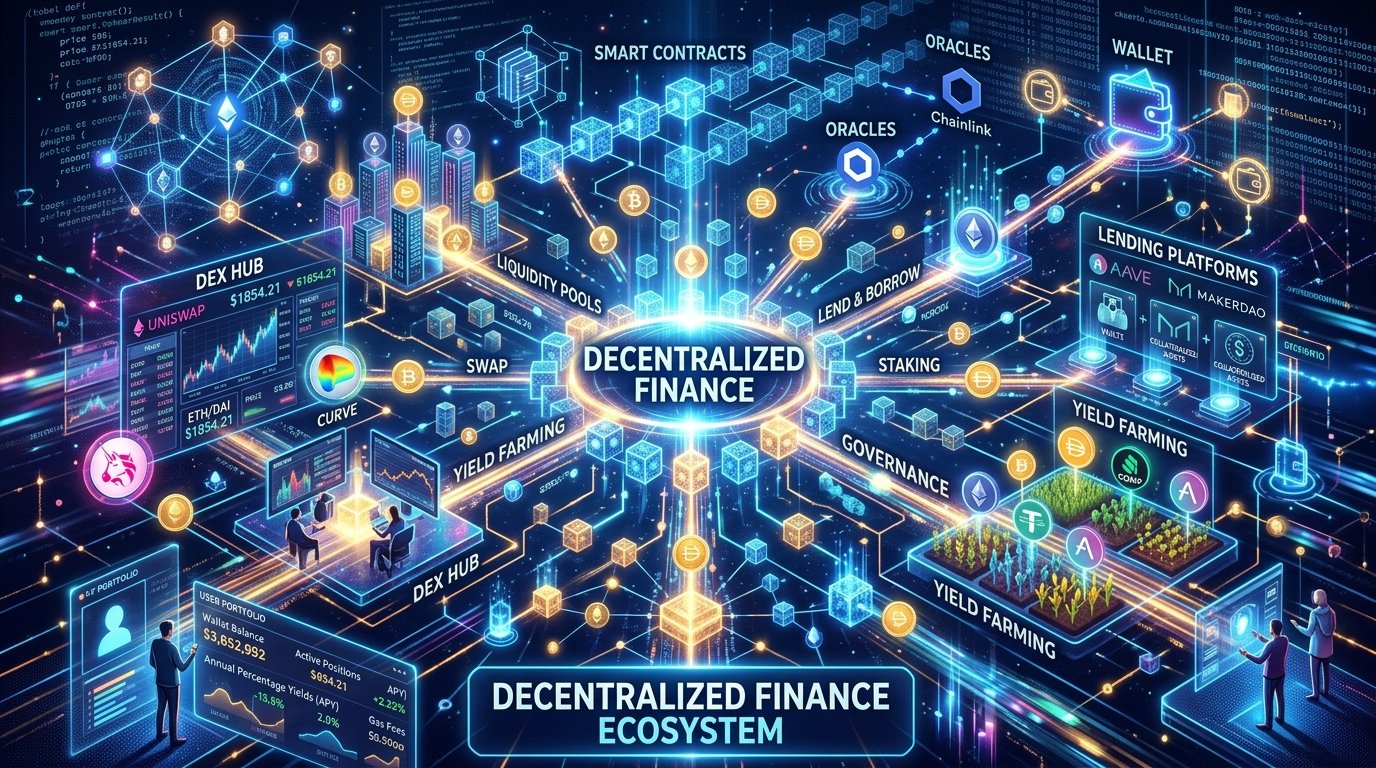
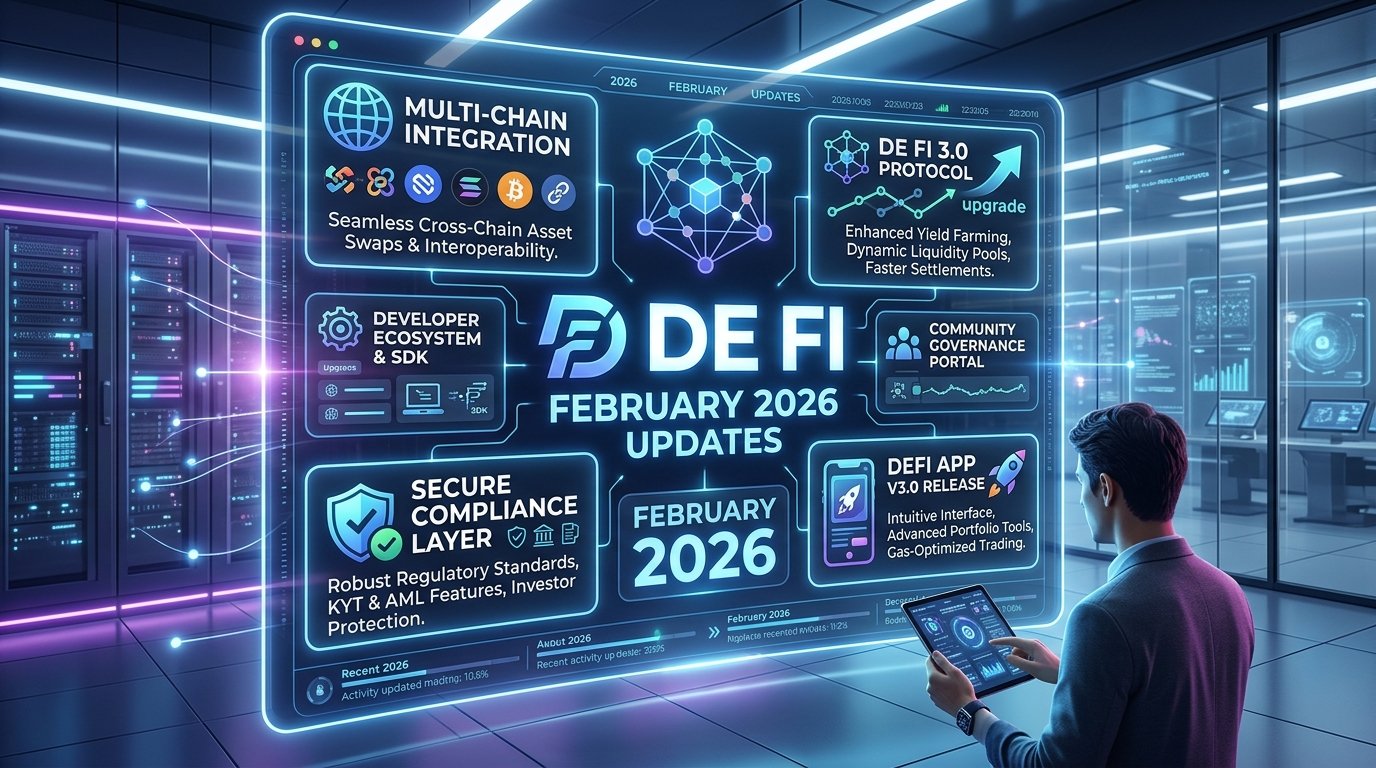
In February 2026, the financial world continues to witness an unprecedented transformation driven by decentralized technologies. At the forefront of this evolution is DeFi, short for decentralized finance, revolutionizing how individuals and institutions access, manage, and interact with financial services. Unlike traditional finance, DeFi removes intermediaries such as banks and brokers by leveraging blockchain technology, smart contracts, and decentralization principles. This shift enables greater financial inclusion, transparency, and efficiency across global markets.
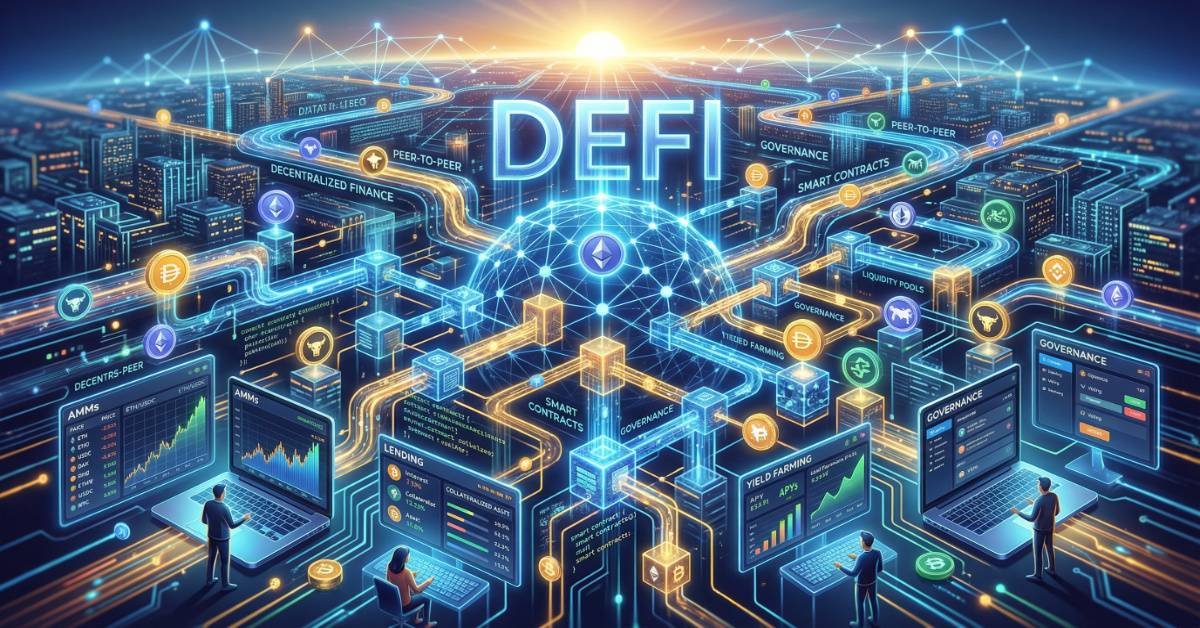
As DeFi grows rapidly, it has expanded beyond simple peer-to-peer transactions to a sophisticated ecosystem powering lending, borrowing, liquidity markets, asset tokenization, and programmable finance. This article explores the core fundamentals of DeFi, its key components and benefits, real-world use cases, challenges and risks, regulatory outlook, future trends, and what users should consider in 2026. Whether you are a curious beginner or a seasoned crypto enthusiast, understanding DeFi’s impact on modern finance is crucial as it reshapes traditional systems and opens doors to new financial opportunities.
What Is DeFi and Why It Matters in 2026
DeFi stands for decentralized finance, a movement within the broader blockchain and cryptocurrency space that envisions a financial system without centralized intermediaries. At its core, DeFi uses decentralized networks and publicly verifiable code to democratize access to financial tools. Instead of relying on banks to secure funds and validate transactions, DeFi protocols operate on smart contracts—self-executing programs that run on blockchain networks like Ethereum, Layer 2 chains, and other smart contract platforms.
In 2026, DeFi’s relevance has grown significantly as global interest in financial autonomy and digital asset ownership expands. People around the world who lack access to traditional banking services can now participate in credit markets, yield generation, asset exchange, and decentralized governance. DeFi’s open architecture empowers users to control their assets and interact with financial markets without permission, creating new avenues for innovation that traditional systems cannot readily match. The increased adoption of DeFi is not merely a technological fad but a structural shift toward transparent, efficient, and accessible finance.
How DeFi Works: The Underlying Technology
Blockchain and Smart Contracts
The backbone of DeFi is blockchain technology, a distributed ledger that records transactions in a secure and transparent manner. Unlike centralized databases controlled by institutions, blockchains are maintained by a network of nodes that reach consensus on the validity of transactions. Smart contracts, which are programs deployed on these blockchains, automatically enforce the terms of agreements without human intervention. They enable complex financial operations, including lending, swapping assets, and yield farming.
Each smart contract in a DeFi protocol interacts with other decentralized applications (dApps), enabling composability. This means that DeFi protocols can integrate seamlessly with one another, creating an interoperable ecosystem sometimes described as “money legos.” For instance, a user could supply assets to a lending protocol, then use the interest earned in another protocol to participate in staking or liquidity pools. This interoperability increases efficiency but also introduces layers of complexity that users must understand.
Decentralized Networks and Consensus Mechanisms
The power of DeFi comes from decentralized networks like Ethereum, Solana, Avalanche, and other Layer 1 and Layer 2 solutions. These networks use consensus mechanisms such as proof-of-stake, proof-of-history, or other hybrid models to validate transactions and secure the network. These systems ensure that no single entity has control, mitigating censorship and single points of failure.
Advancements in blockchain scalability and throughput have contributed to DeFi’s growth in 2026. Layer 2 solutions, sharding, and cross-chain connectivity have reduced transaction costs and enabled high-performance applications that rival centralized services in speed and user experience. As a result, DeFi ecosystems attract users seeking cost-effective financial services and developers innovating new financial products.
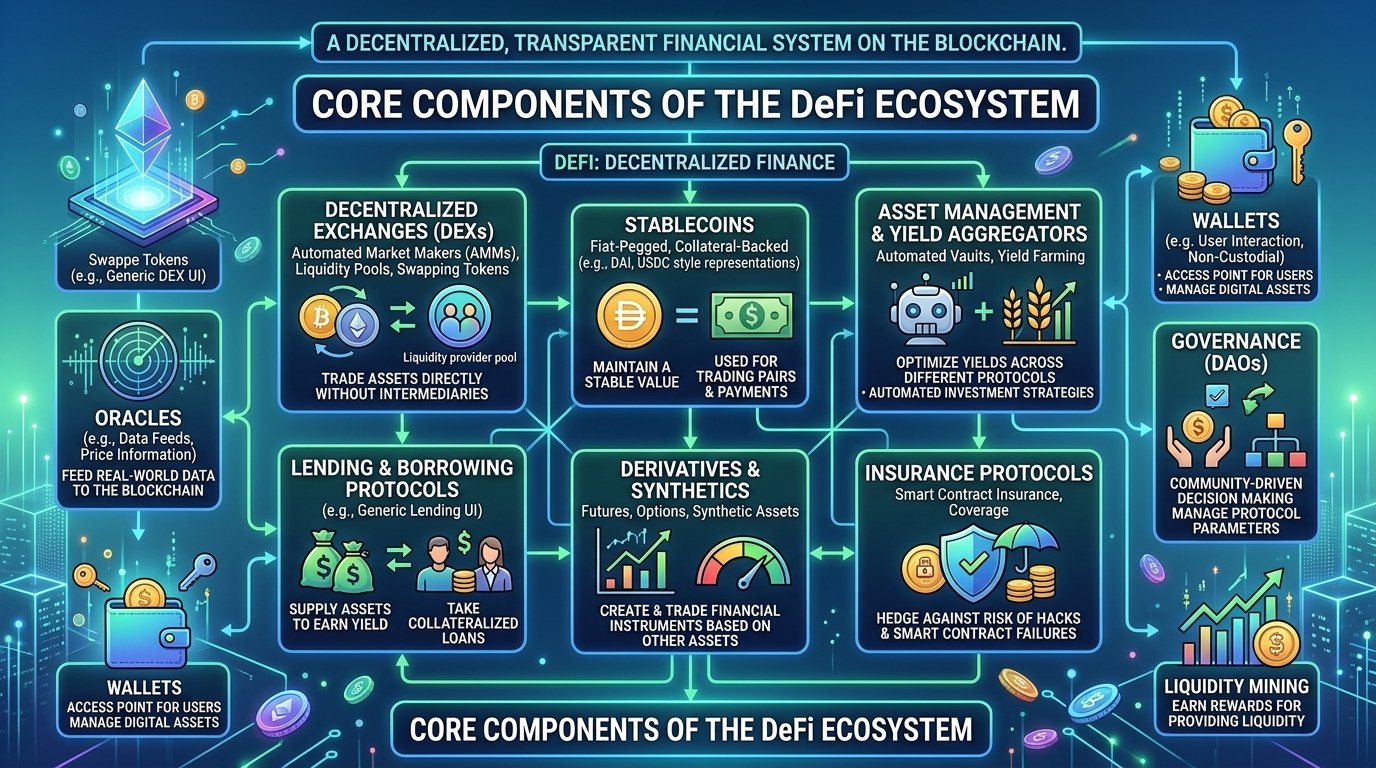
Core Components of the DeFi Ecosystem
Decentralized Exchanges (DEXs)
One of the earliest and most popular applications within DeFi are decentralized exchanges. Unlike traditional exchanges that hold custody of assets, DEXs allow users to trade directly from their wallets using automated market makers (AMMs). AMMs enable trading by providing liquidity through smart contracts rather than matching buyers and sellers. Users supply assets to liquidity pools and receive fees proportional to their share, creating an incentive for participation.
The rise of DEXs has democratized asset exchange by lowering barriers and increasing transparency. Anyone can list a token on a DeFi exchange, which has led to a proliferation of innovative digital assets. However, the absence of centralized oversight also introduces risks related to fraud and low-quality projects, making due diligence essential.
Lending and Borrowing Platforms
DeFi lending and borrowing platforms allow users to lend their assets to others and earn interest or borrow assets by posting collateral. These protocols use smart contracts to automate interest rate calculations, collateral management, and liquidations. Because DeFi lending protocols operate without intermediaries, they often offer more competitive rates than traditional financial institutions.
The ability to borrow against crypto assets without selling them has become especially appealing in 2026. Crypto holders can access liquidity while retaining exposure to potential price appreciation. However, the decentralized nature of these platforms means users must manage risks associated with price volatility and collateral liquidation.
Yield Farming and Liquidity Mining
Yield farming refers to the practice of strategically moving assets across DeFi protocols to maximize returns. Liquidity mining is a specific form of yield farming where users earn governance tokens for providing liquidity to certain pools. These incentives have driven significant capital into DeFi, boosting overall growth.
While yield farming can generate attractive returns, it also requires users to evaluate complex factors such as impermanent loss, smart contract vulnerabilities, and token emission schedules. As DeFi matured in 2026, many sophisticated strategies emerged that blend algorithmic yield optimization with risk management techniques.
Stablecoins and Tokenized Assets
Stablecoins play a crucial role in DeFi by providing a relatively stable medium of exchange and store of value. They are typically pegged to fiat currencies like the U.S. dollar and are used extensively for trading, borrowing, lending, and liquidity provision. The proliferation of stablecoins has lowered barriers to participation in DeFi for users seeking predictability in an otherwise volatile asset class.
Beyond stablecoins, DeFi has expanded into tokenized assets representing real-world value, including commodities, real estate, and equities. Tokenization improves liquidity and fractional ownership, allowing investors to access high-value assets with smaller capital outlays. These innovations blur the lines between traditional finance and decentralized ecosystems and continue to attract institutional interest.
Benefits of DeFi: Transparency, Access, and Innovation
DeFi offers several advantages over traditional financial systems:
Increased transparency is foundational to DeFi, as all transactions and smart contract code are publicly visible on blockchains. Users can audit protocols and verify how funds are managed, reducing reliance on trust in centralized institutions. This transparency builds confidence and fosters community-driven innovation.
Financial inclusion is another hallmark of DeFi. Individuals without access to banks can participate in lending, borrowing, and trading with just an internet connection and a digital wallet. This democratization of financial services has the potential to uplift underserved populations globally and reduce systemic inequality.
Innovation flourishes in DeFi as developers can build composable protocols that interact seamlessly with one another. New financial primitives like flash loans, automated portfolio managers, and decentralized insurance products have emerged from this open environment. Investors and users benefit from a dynamic ecosystem that adapts quickly to market demand.
Challenges and Risks Facing DeFi in 2026
While DeFi has achieved remarkable growth, it is not without challenges. One of the primary concerns remains smart contract risk. Because DeFi protocols are governed by code, any flaw or vulnerability in that code can lead to significant losses. High-profile exploits and hacks have cost users billions of dollars over the years, highlighting the importance of rigorous security audits and robust risk management.
Regulatory uncertainty also looms large. Governments and financial regulators around the world are grappling with how to oversee decentralized systems that defy traditional jurisdictional boundaries. In some regions, regulators have embraced innovation, crafting frameworks to foster responsible growth. In others, restrictive policies have slowed adoption and access. The evolving regulatory landscape in 2026 means that DeFi participants must stay informed about compliance obligations and potential legal implications.
Another challenge is scalability. Despite improvements in blockchain throughput and Layer 2 scaling solutions, DeFi applications still face performance limitations during periods of high demand. Congestion can lead to increased fees and slower transaction times, which can deter mainstream users accustomed to seamless financial experiences.
The Regulatory Outlook for DeFi
As DeFi matures, regulators are increasingly engaging with the space to mitigate risks while encouraging innovation. Key regulatory themes in 2026 include greater transparency in token issuance, clearer definitions of securities, and enhanced consumer protections. Some jurisdictions have introduced licensing frameworks for DeFi service providers, aiming to balance innovation with oversight.
Regulatory clarity can attract institutional capital, as institutions often require well-defined legal frameworks before committing significant resources. At the same time, overly prescriptive regulations could stifle innovation and push activity toward more permissive jurisdictions.
Globally coordinated efforts, such as international standards for digital asset management and anti-money laundering compliance, are shaping how DeFi protocols operate across borders. Users and developers must pay attention to regulatory developments in their jurisdictions to ensure compliance and avoid potential penalties.
Real-World Use Cases Driving DeFi Adoption
The practical applications of DeFi have expanded far beyond speculative trading. In 2026, DeFi has been adopted for a variety of real-world financial needs. For example, decentralized lending platforms allow small businesses to access capital without the barriers imposed by traditional banks. This flexibility empowers entrepreneurs in emerging markets to grow their ventures with fewer constraints.
Decentralized insurance protocols offer coverage against specific blockchain risks, such as smart contract failures or oracle manipulation. These products help mitigate risk for investors participating in high-yield opportunities and improve confidence in DeFi participation.
Cross-border payments are another area where decentralized finance demonstrates clear advantages. Traditional remittance systems can be slow and expensive, particularly for underserved populations. DeFi enables near-instant settlement with lower cost, expanding economic participation and facilitating global commerce.
The Role of Governance and Decentralization
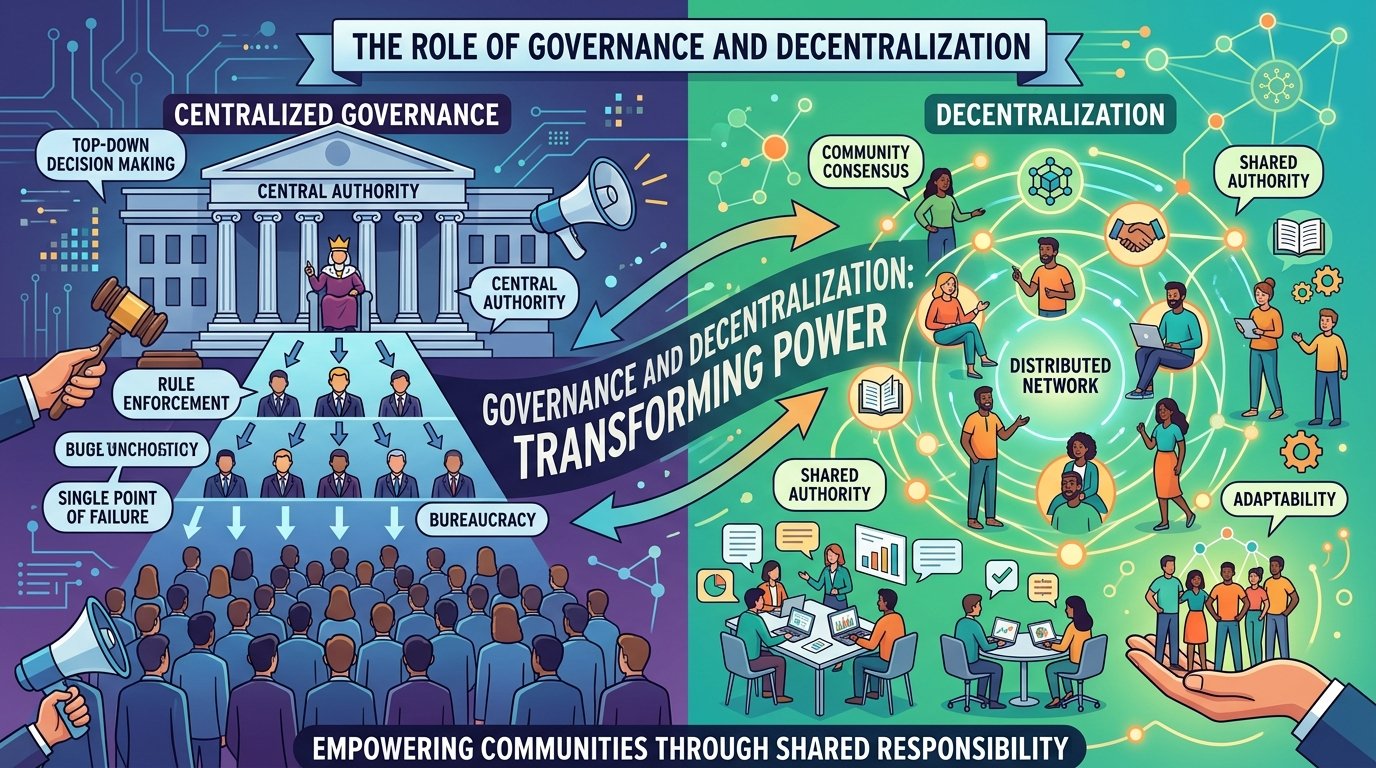
Governance is a core pillar of DeFi, enabling community-driven decision-making through decentralized autonomous organizations (DAOs). Token holders can vote on protocol changes, fee structures, treasury allocations, and strategic partnerships. This democratized governance model replaces centralized control with collective input, aligning protocol incentives with the community’s vision.
However, governance in DeFi can be complex and faces challenges related to voter participation and influence concentration. Large token holders may exert disproportionate control over decisions, leading to debates about fairness and decentralization. In response, many DeFi projects are experimenting with novel governance models that balance representation, engagement, and accountability.
DeFi Security: Best Practices for Users
Security remains paramount for anyone participating in DeFi. Users should adopt best practices to protect their assets, including using hardware wallets for private key storage, enabling multi-factor authentication, and verifying contract addresses before interacting with protocols. Understanding the risks associated with impermanent loss, liquidations, and market volatility is also essential for responsible participation.
Protocol security should also be evaluated by users. Independent audits, bug bounty programs, and transparent development teams are indicators of a more secure project. Diversifying assets and limiting exposure to any single protocol can reduce risk and improve long-term outcomes.
The Future of DeFi: Trends to Watch
Looking beyond 2026, several trends are likely to shape DeFi’s trajectory. Cross-chain interoperability continues to be a major focus, enabling assets and data to flow seamlessly between different blockchain networks. This connectivity will unlock new opportunities for innovation and improve liquidity across ecosystems.
The integration of artificial intelligence with DeFi could transform automated trading strategies, risk assessment, and personalized financial planning. AI-powered analytics may offer deeper insights into market conditions, helping users make informed decisions in real time.
Institutional adoption of DeFi is another trend to watch. As regulatory clarity improves, institutional investors may increasingly allocate capital to decentralized protocols, bringing liquidity, credibility, and advanced financial products to the space.
Conclusion
In 2026, DeFi stands as a testament to how technology can redefine finance. By leveraging decentralized networks, smart contracts, and open-source innovation, DeFi has introduced a more inclusive, transparent, and efficient financial ecosystem. While challenges remain—including smart contract risk, regulatory uncertainty, and scalability concerns—DeFi’s evolution continues to unlock real-world use cases and opportunities for individuals and institutions alike. As we look toward the future, DeFi is poised to play an even greater role in shaping how the world interacts with financial systems, empowering users with unprecedented access to financial tools and services.
Frequently Asked Questions (FAQs)
1. What is DeFi and how does it differ from traditional finance?
DeFi, or decentralized finance, uses blockchain and smart contracts to provide financial services without intermediaries like banks. Unlike traditional finance, DeFi offers transparency, permissionless access, and programmable financial tools.
2. Is investing in DeFi safe?
While DeFi offers innovative opportunities, it carries risks such as smart contract vulnerabilities and market volatility. Users should research protocols, use secure wallets, and follow best security practices.
3. What are decentralized exchanges (DEXs)?
DEXs are platforms that allow users to trade digital assets directly from their wallets using automated market makers (AMMs) instead of relying on centralized order books, increasing transparency and control.
4. How do DeFi lending platforms work?
DeFi lending platforms connect lenders and borrowers through smart contracts. Lenders earn interest by supplying assets, while borrowers post collateral to access loans without traditional intermediaries.
5. Can DeFi be regulated?
Yes, regulators are increasingly engaging with DeFi to create frameworks that protect consumers while fostering innovation. Regulatory approaches vary globally and continue to evolve as the ecosystem matures.

Post Comment