Bitcoin Mining 2026: Latest February Update & Trends

Bitcoin mining continues to dominate headlines in 2026 as the backbone of the Bitcoin network, securing decentralized trust and minting new BTC through energy‑intensive Proof‑of‑Work computation. As we moved through February 2026, the Bitcoin mining industry experienced a series of impactful developments — from operational results and production statistics to difficulty fluctuations and sector‑wide strategic pivots. In this article, we dive deep into all the major Bitcoin mining news, unpacking operational updates from leading miners, shifts in mining economics, the broader global landscape, and what these changes mean for miners, investors, and the future of the Bitcoin network.
Whether you’re a crypto enthusiast, a miner, or just curious about how Bitcoin mining is evolving, this comprehensive update will explain everything you need to know from recent industry movements, macroeconomic influences, and what lies ahead in the Bitcoin mining sector.
February 2026 Bitcoin Mining Operational Updates
CleanSpark and Bitcoin Mining Performance
One of the prominent public miners, CleanSpark, Inc., released its operational update for February 2026, offering insight into its mining performance and infrastructure status. Although the company’s comprehensive details were not fully disclosed, the update reflects the ongoing efforts of CleanSpark to optimize mining operations amid changing network conditions and profitability pressures. CleanSpark continues to focus on expanding its operational footprint and mining capacity as market conditions fluctuate.
The operational updates from miners like CleanSpark are important because they reveal how publicly listed mining companies are navigating challenges like rising energy costs, shifting Bitcoin prices, and competitive mining difficulty.
Canaan’s Mining Expansion & Output Metrics
Another key player in the mining industry, Canaan Inc., reported its February 2026 production and mining operation updates. The company recorded a total Bitcoin output of 86 BTC for the month, which helped increase its treasury holdings to roughly 1,793 BTC — a significant strategic reserve for future operational stability. Furthermore, Canaan expanded its mining footprint in West Texas with additional power capacity, bringing its global installed power capacity to over 255 MW alongside a 120 MW joint venture capacity.
This expansion underscores how large miners continue to prioritize access to low‑cost energy sources — particularly in energy‑rich regions like Texas — to maintain competitive Bitcoin mining profitability.
Bitdeer’s Remarkable Production Surge
Perhaps one of the most striking developments from February 2026 came from Bitdeer Technologies Group, which announced a 541% Year‑Over‑Year increase in Bitcoin production, reaching 705 BTC mined. Bitdeer also continued to emphasize its focus on colocation lease agreements and strong operational performance in its AI cloud segment.
What makes Bitdeer’s report notable is not just the production growth but how this miner combines traditional Bitcoin mining with diversified revenue streams — a model that could become more common as the industry adapts to post‑halving economics.
BitFuFu Operational Insights
Alongside these updates, BitFuFu Inc. released its own February 2026 Bitcoin production and operational metrics, reflecting growing output and business developments for one of the world’s active mining companies. While the specific mined BTC figures weren’t fully disclosed in the public summary, BitFuFu’s consistent communication highlights ongoing efforts to scale its mining presence in a competitive and dynamic environment.
Collectively, these mining companies illustrate the broader trend of operational resilience — adjusting strategies, securing additional computing power, and seeking low‑cost energy solutions to remain profitable in a tighter cost environment.
Bitcoin Network Difficulty & Hashrate Trends
Record Rising Mining Difficulty
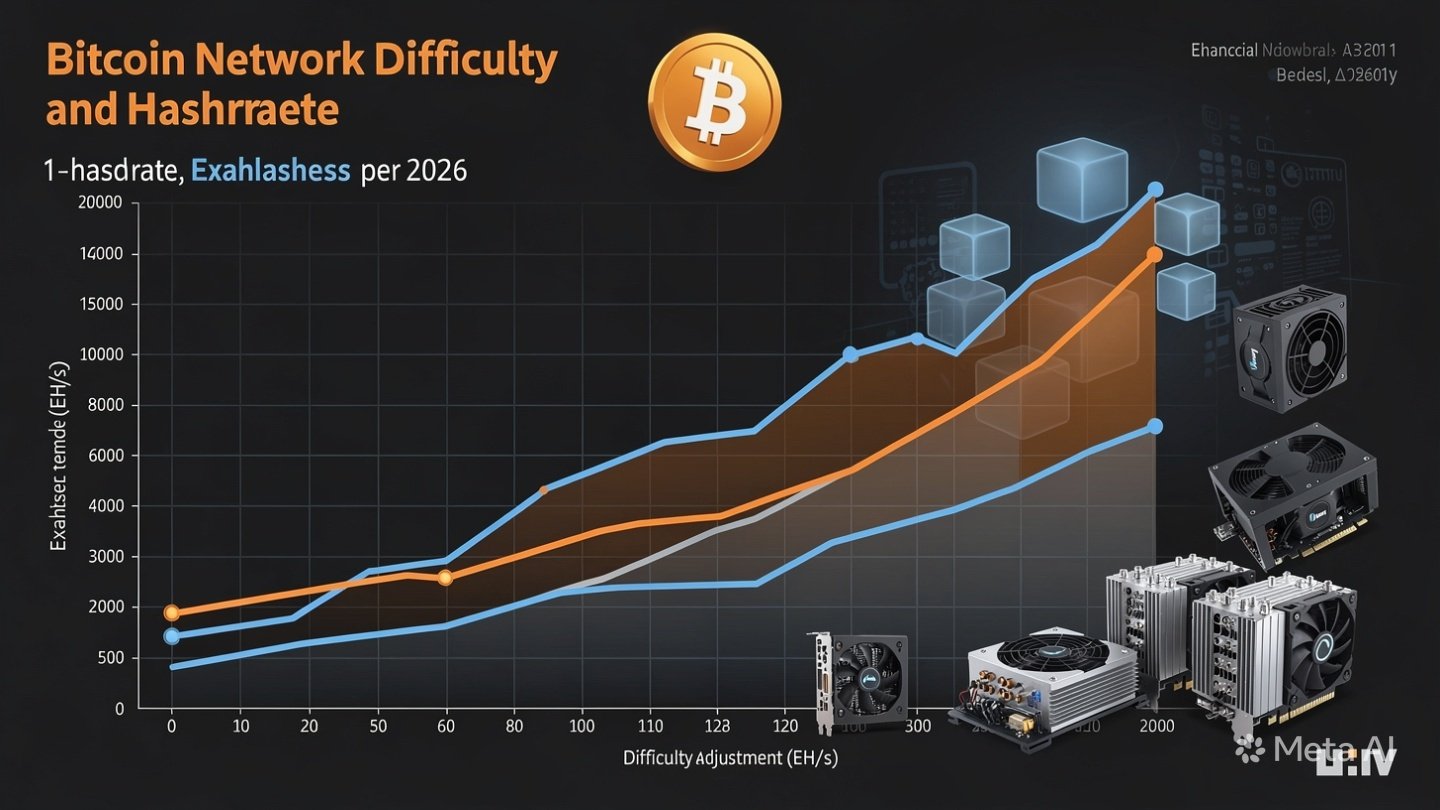
A pivotal technical update in February 2026 was the significant surge in Bitcoin mining difficulty, which climbed nearly 15% to a record high of around 144.4 trillion. This increase represents one of the most substantial difficulty adjustments in Bitcoin history, indicating robust competition among miners and a rising network hashrate. Higher difficulty means miners must deploy more computational power and energy to maintain the same share of block rewards.
This trend suggests that despite macroeconomic pressures and profitability concerns, miners are still committing resources and hashing power — a bullish signal for network security but a challenge for margins.
Hashrate Dynamics and Profitability Pressures
Bitcoin’s hashrate — a measure of total computational power securing the network — saw fluctuations. At times in February 2026, reported hashrate levels soared above 1 zettahash per second (1.06 ZH/s average), driven by a mix of efficient mining rigs and large institutional mining operations.
However, mining profitability remained strained. Some community analysts reported that mining was approaching “shutdown prices,” where the cost to mine a Bitcoin approaches or exceeds its market price, leading some inefficient miners to temporarily shut down or seek alternative revenue streams. These trends highlight an increasingly competitive and resource‑intensive mining environment post‑Bitcoin halving — where efficient energy usage, cost management, and strategic positioning become essential.
Bitcoin Price & Mining Economics
Market Volatility and BTC Price Impact
February 2026 witnessed significant price action for Bitcoin itself. At certain points, Bitcoin dipped below $70,000, influenced by broader macroeconomic factors such as Federal Reserve policy signals, inflation concerns, and energy price volatility. This price movement directly affected mining economics since miners earn rewards in BTC and must sell part of their holdings to cover operational expenses.
Lower prices, combined with higher energy and infrastructure costs, have squeezed miners’ profit margins — especially for smaller mining operations without efficient hardware or access to cheap electricity.
Cost of Production Considerations
The cost of producing Bitcoin has become a focal issue for miners and industry analysts alike. While major miners with efficient setups can mine Bitcoin at relatively lower costs, the average cost of production across the industry has risen post‑halving — in some models approaching or even exceeding current BTC prices in certain regions.
This evolving cost landscape has significant implications for miner survival, capital allocation decisions, and future production strategies as miners seek to balance energy costs with network rewards.
Broader Industry Shifts & Strategic Realignment
Mining Meets AI and High‑Performance Computing
A fascinating trend emerging in 2026 is how traditional Bitcoin mining infrastructure is being leveraged for AI workloads and high‑performance computing (HPC). Industry reports and community insights indicate firms are increasingly exploring ways to repurpose mining‑related data centers to handle AI compute tasks — offering a supplemental revenue stream beyond crypto rewards.
This strategic diversification is driven by the competitive pressures of post‑halving mining economics. With block rewards halved and network difficulty rising, using excess power infrastructure and computing capability for AI workloads can improve overall financial performance and resilience.
Regulatory & Environmental Developments
While the focus remains on operational efficiency, miners also face regulatory and environmental scrutiny. For example, certain jurisdictions have introduced moratoriums or restrictions on crypto mining data centers due to grid capacity concerns and environmental impact considerations.
These regulatory dynamics play an important role in shaping where and how miners can deploy operations — often favoring regions with stable power infrastructure, cooler climates, and supportive policies.
Future Outlook for Bitcoin Mining (Post‑Halving Era)
Toward 2028 Halving & Network Evolution
With the next Bitcoin halving expected around late 2028, miners are already preparing for a future where block rewards halve again, further tightening revenue streams. This raises important questions about how miners will adapt — either through increased efficiency, alternative revenue strategies, or consolidation.
The introduction of more sophisticated mining hardware, improved power management, and strategic energy partnerships will be decisive factors for miner sustainability.
Security and Network Resilience
Despite economic pressures, the Bitcoin network security remains strong, supported by sustained high hashrate levels. Higher difficulty and hashrate reflect confidence among large mining entities and contribute to greater resistance against attacks like 51% attacks or illicit mining activity.
Conclusion
The Bitcoin mining landscape in February 2026 reveals an industry at a pivotal crossroads. Major miners like CleanSpark, Canaan, Bitdeer, and BitFuFu reported measurable production results and operational adaptations in response to a tougher economic environment. Meanwhile, mining difficulty surged to record levels, bolstering network security yet tightening margins for miners worldwide.
Additionally, macroeconomic forces and shifting energy costs continue to influence market dynamics, while strategic pivots into AI computing and data center services highlight the industry’s creativity in diversifying revenue. As Bitcoin edges closer to the next halving and evolves beyond its original reward‑driven model, miners who innovate, optimize, and plan ahead are likely to thrive.
Bitcoin mining remains the lifeblood of the Bitcoin network, shaping everything from security to decentralization and value distribution. Keeping an eye on latest updates, profitability trends, and long‑term strategies will be essential for anyone engaged in or considering entry into the Bitcoin mining space.
Frequently Asked Questions (FAQs)
1. What is Bitcoin mining and why does it matter?
Bitcoin mining is the process of validating transactions and securing the Bitcoin network using specialized hardware to solve cryptographic puzzles. Miners receive block rewards and transaction fees as incentives, making mining central to Bitcoin’s decentralized security architecture.
2. Why did Bitcoin mining difficulty surge in February 2026?
Mining difficulty increases when more computational power enters the network, making block discovery harder. In February 2026, difficulty surged due to higher hashrate contributions from mining operations globally, reflecting robust competition among miners.
3. How does Bitcoin price affect mining profitability?
Bitcoin price directly affects miner revenue since rewards are paid in BTC. Lower prices compress margins, especially when mining costs — such as electricity and infrastructure — remain high. Conversely, higher BTC prices improve profitability.
4. Are miners diversifying into non‑crypto activities?
Yes, some mining companies are exploring diversification into AI and high‑performance computing as a way to monetize existing data center infrastructure beyond traditional Bitcoin mining, enhancing financial stability and adaptability.
5. What challenges are miners facing heading toward the next halving?
Post‑halving reward reductions tighten revenue streams, forcing miners to optimize energy efficiency, secure cheap power, upgrade hardware, and potentially consolidate with other operations. The evolving landscape demands strategic planning and financial resilience.
See More:Bitcoin mining companies switching to AI for higher profitability


Post Comment