In February 2026, Blockchain Technology continued its rapid evolution, reshaping industries far beyond cryptocurrency and finance. Once purely associated with Bitcoin and digital tokens, blockchain has now become an indispensable distributed ledger system powering asset tokenization, decentralized finance (DeFi), supply chain transparency, institutional adoption, regulatory innovation, and advanced smart contract applications. By embracing decentralized systems that eliminate intermediaries while improving security and transparency, blockchain is redefining how global business, governance, and finance operate in the digital age. This article examines significant developments and the broader implications shaping the blockchain landscape as we move through 2026.
Key Blockchain Technology News & Developments from February 2026
Institutional Adoption & Financial Market Integration
In March 2026, the New York Stock Exchange (NYSE) announced a strategic partnership with Securitize to build a tokenized securities platform, marking a major milestone in institutional adoption of Blockchain Technology. This initiative will enable the issuance and trading of blockchain‑based securities — such as tokenized stocks and exchange‑traded funds — on a platform designed for real‑time, efficient settlement and digital asset infrastructure.
Similarly, global investment and asset management firms are actively integrating blockchain into traditional finance. For example, Ripple and Aviva Investors collaborated to explore tokenizing traditional fund structures, expanding blockchain’s impact on broader financial markets and asset classes. These developments signal a deepening convergence between traditional financial systems and decentralized financial infrastructure, pushing blockchain further into mainstream institutional use. Notably, the expansion of regulated Bitcoin, Ether, and other cryptocurrency exchange‑traded funds (ETFs) continues to attract broader institutional participation.
Blockchain & Regulatory Policy Advancement Worldwide
Policy and regulatory frameworks for digital assets and Blockchain Technology are evolving rapidly in 2026. A growing number of governments and regulators are developing clearer regulatory guidelines for digital assets, focusing on transparency, anti‑money‑laundering standards, and stable coin frameworks. Increased regulatory clarity is shaping business models and fostering stronger integration between digital asset companies and traditional financial institutions.
In the United States, a federal crypto regulatory bill advanced through committee, signaling momentum toward national frameworks that govern blockchain‑based assets — although full passage remains uncertain. Studies also show a global push toward stable coin regulation and operational standards, establishing infrastructure rules that enhance institutional trust in blockchain‑powered systems.
Banking & Payments Integration
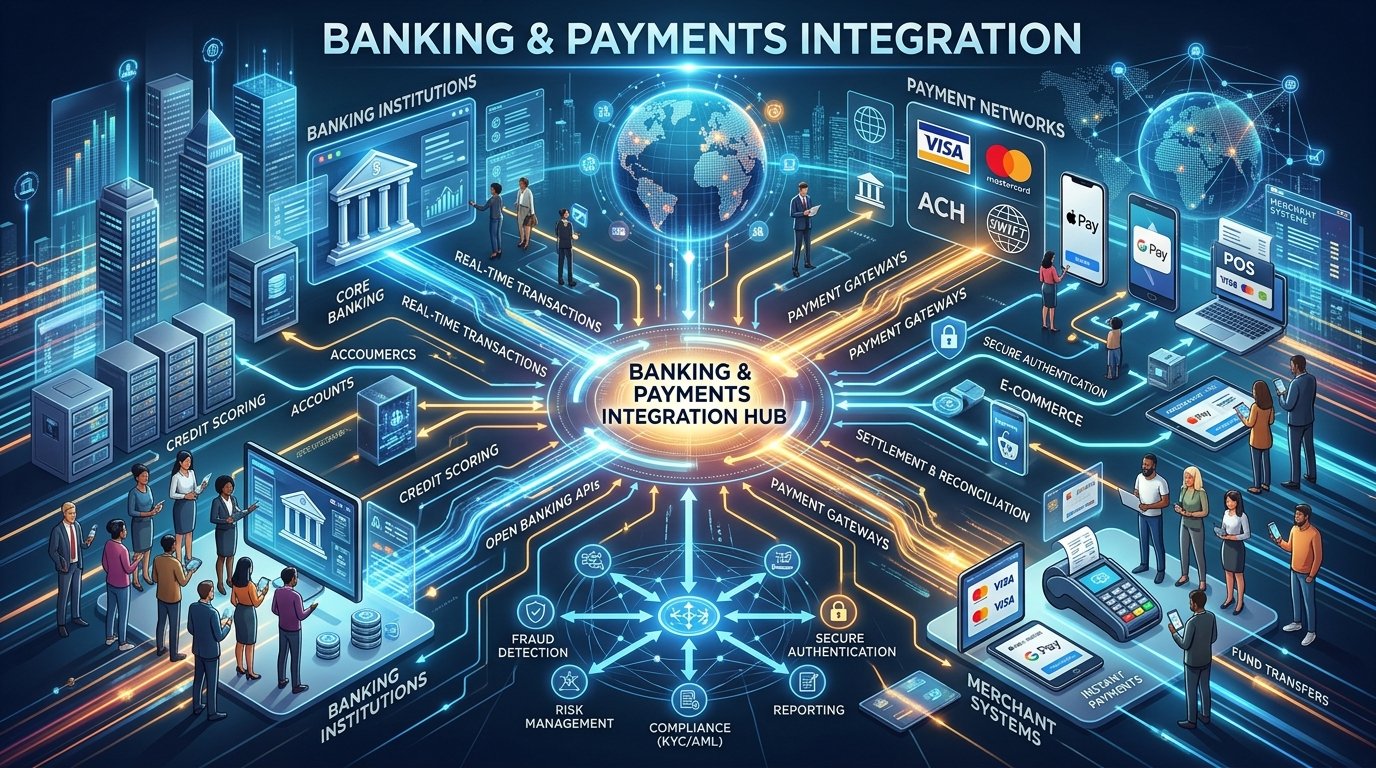
Incumbent banking giants are embracing Blockchain Technology to modernize payment systems and product offerings. Barclays, for instance, explored building a blockchain platform to support more efficient payment processing and decentralized services, challenging traditional banking systems with competitive decentralized infrastructure.
Meanwhile, Canadian banks like the Bank of Montreal are planning tokenized cash platforms that allow institutional clients to securely move funds 24/7 using blockchain ledgers — highlighting the growing integration of blockchain into core banking operations.
These developments underscore how blockchain is no longer a niche concept but a strategic priority for financial institutions seeking competitive advantage and improved operational efficiency.
Blockchain Technology & Real‑World Applications
Tokenization of Assets & Security Markets
One of the most compelling innovations in Blockchain Technology is the tokenization of real‑world assets. Assets such as stocks, bonds, real estate, and even intellectual property can now be represented as digital tokens on blockchain networks, making them tradable and programmable. Tokenization improves liquidity, reduces settlement times, lowers transaction costs, and creates new investment opportunities.
The NYSE’s collaboration with Securitize reinforces this shift by enabling real‑time settlement of tokenized securities, signaling a major step toward making digital assets a standard element of institutional investment portfolios.
Supply Chain Traceability & Sustainability
Blockchain Technology is also transforming supply chain management by providing immutable, transparent records that trace products from origin to delivery. A peer‑reviewed study published in early 2026 highlighted the role of blockchain in enhancing performance, transparency, and fraud prevention in supply chain finance.
This improvement in traceability plays a critical role in quality assurance, risk management, and consumer confidence — especially in sectors like agriculture, pharmaceuticals, and logistics.
Integration with IoT and Real‑Time Systems
As the Internet of Things (IoT) expands, blockchain’s decentralized ledger capabilities promise secure, tamper‑proof exchanges of data among connected devices. However, integrating blockchain with IoT presents challenges like scalability and latency. Recent research emphasizes innovative protocols and architectures designed to support real‑time data transactions through scalable blockchain frameworks.
This intersection of blockchain and IoT can revolutionize smart systems — from industrial automation to healthcare technology — by ensuring data integrity and autonomous decision‑making across decentralized networks.
Blockchain in ESG & Corporate Reporting
Blockchain’s decentralized ledger offers significant advantages for environmental, social, and governance (ESG) frameworks by ensuring transparent, auditable, and verifiable records of corporate sustainability efforts. Researchers have described how cryptographic techniques like zero‑knowledge proofs and smart contracts can enhance data validation while preserving sensitive information, making blockchain a powerful tool for ESG assurance.
This integration improves stakeholder trust and accountability in sustainability reporting and helps companies demonstrate compliance with environmental regulations.
Emerging Blockchain Protocol Developments in 2026
XDC Network February 2026 Ecosystem Updates
The February 2026 edition of the XDC Pulse ecosystem update showcased major progress for the XDC Network, including the implementation of advanced upgrades to improve efficiency (such as EIP‑1559 compatibility), stronger consensus mechanisms, and broader institutional integrations like regulated custody services.
Partnerships aimed at expanding trade finance infrastructure, liquidity pools, and global liquidity support reflect blockchain’s growing role in real‑world financial applications — especially those targeting trade finance, supply chain documentation, and decentralized exchange (DEX) capabilities.
Broader Ecosystem Growth
Blockchain developer and enterprise interest continues to grow in 2026, with innovation in areas such as decentralized applications (dApps), smart contract platforms, DeFi services, and cross‑chain interoperability. These advancements reflect blockchain’s maturing infrastructure and increasing relevance across diverse sectors.
Challenges & Opportunities in 2026
Regulatory Uncertainties
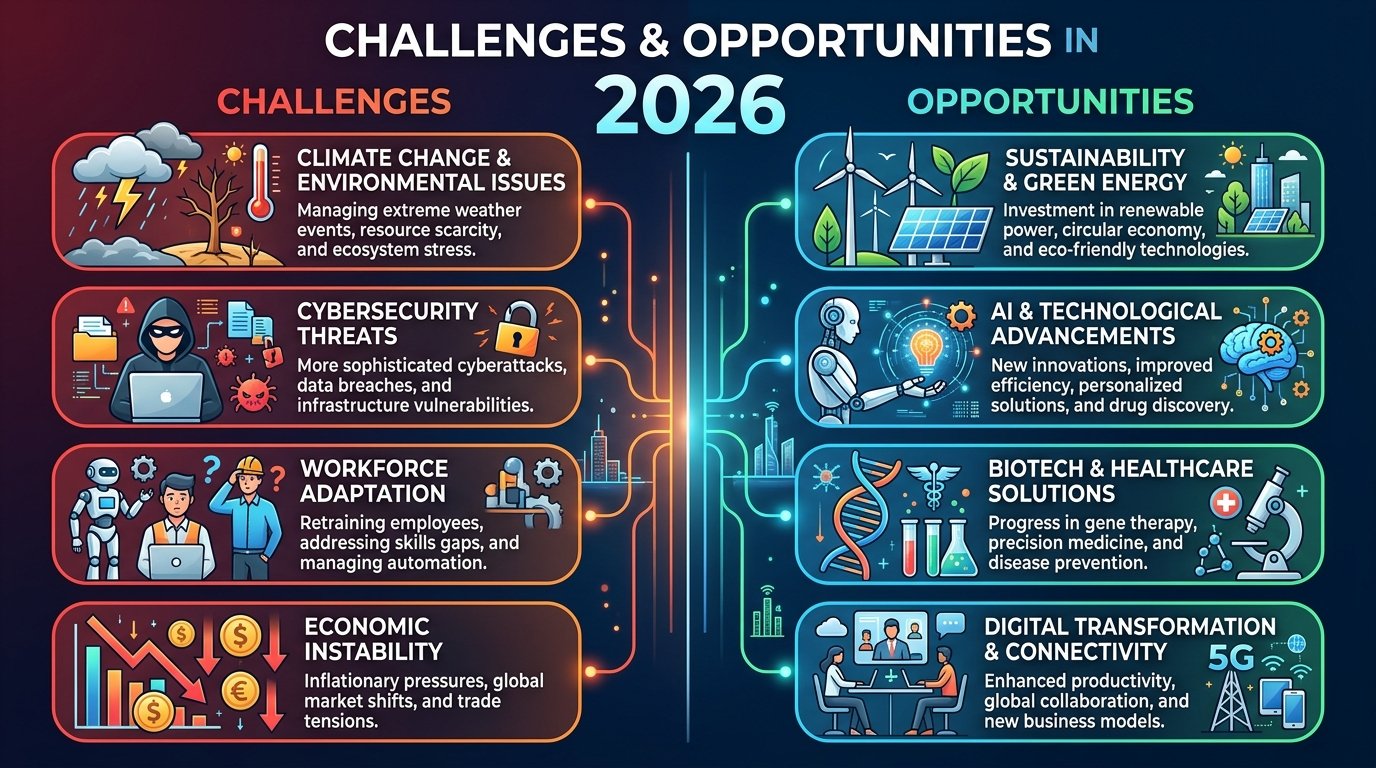
While regulatory frameworks are evolving, uncertainty remains a persistent challenge. Laws and compliance requirements differ widely across jurisdictions, creating complexity for global blockchain adoption. Nonetheless, recent policy advancements show regulators increasingly recognize blockchain’s economic potential and the need to balance innovation with consumer protection.
Technological Scalability & Security
Scalability, interoperability, and security continue to be priorities for blockchain developers. Solutions such as layer‑2 scaling, hybrid architectures, and cross‑chain protocols aim to enhance blockchain network performance without compromising decentralization and trust.
Security concerns — especially related to quantum computing threats — are also influencing blockchain research. Dedicated efforts are underway to integrate quantum‑secure signatures and advanced cryptographic protections as part of future proofing blockchain systems.
Global Adoption & Innovation
Despite these challenges, the opportunities for blockchain are immense. Institutions, enterprises, governments, and emerging markets are increasingly exploring blockchain solutions to improve transparency, reduce costs, strengthen data security, and innovate user experiences.
From digital identities and decentralized finance to tokenized assets and interoperable networks, blockchain’s potential applications are nearly boundless — and its adoption trajectory continues to rise.
Conclusion
In conclusion, Blockchain Technology in February 2026 stands at a transformative inflection point. Institutional adoption, regulatory maturation, real‑world applications, and technological innovation are all converging to elevate blockchain from niche crypto infrastructure to mainstream global digital infrastructure.
As the technology matures, industries across finance, logistics, governance, sustainability, and digital identity recognize blockchain’s value in delivering transparency, security, efficiency, and trust. The progress made in tokenized securities, decentralized finance, policy frameworks, and enterprise blockchain solutions underscores a future where blockchain will shape the fundamental architecture of digital systems.
Whether it’s real‑time settlement, immutable supply chain records, digital asset tokenization, or secure IoT ecosystems, blockchain is no longer just a buzzword — it’s a foundational layer for the next generation of digital transformation.
FAQs About Blockchain Technology in 2026
1. What is Blockchain Technology?
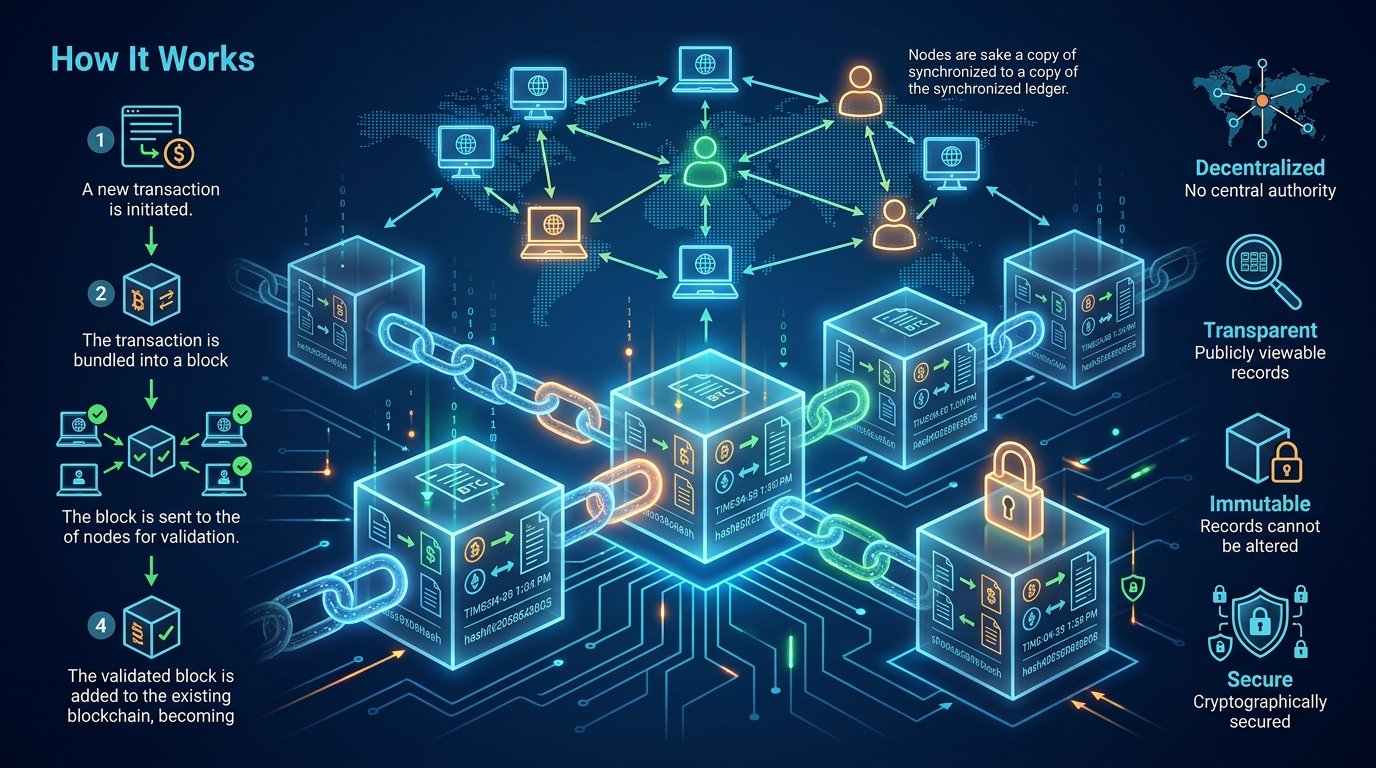
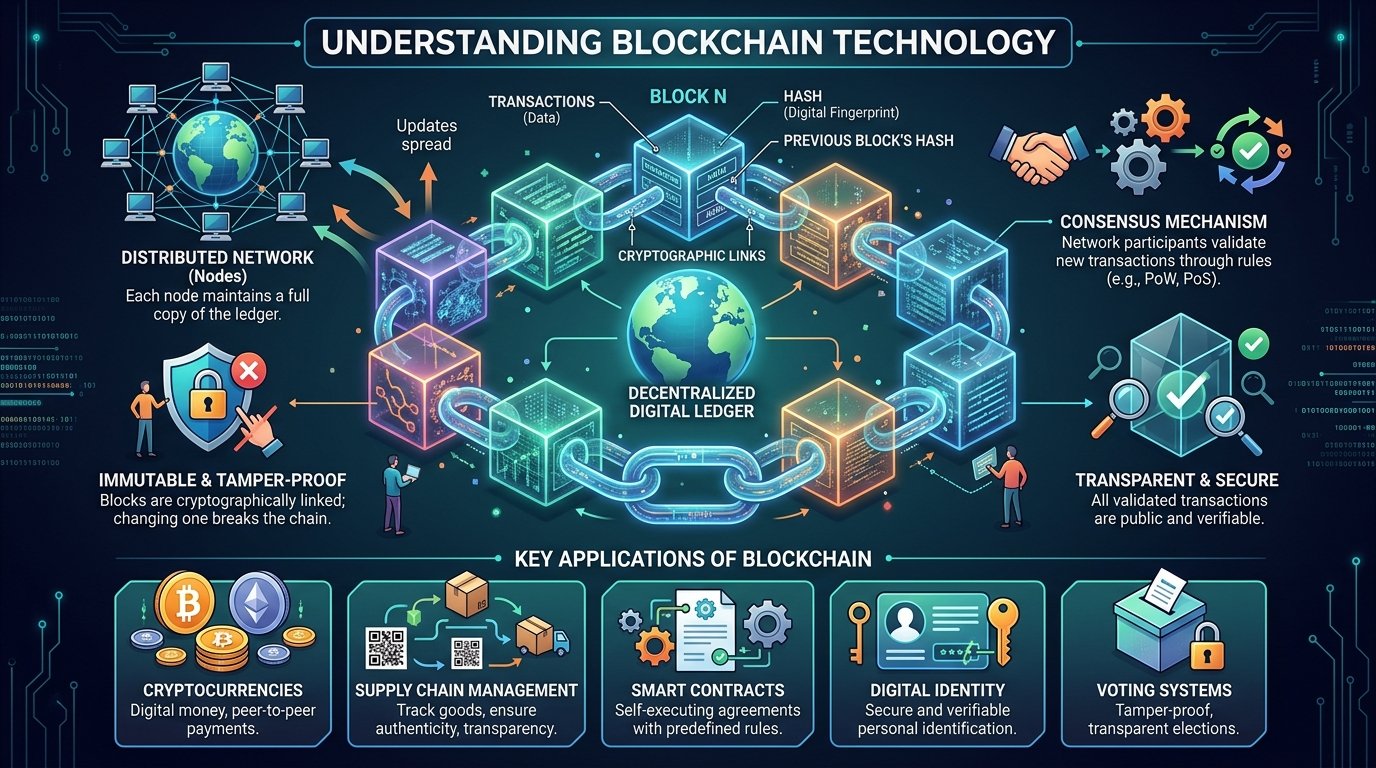
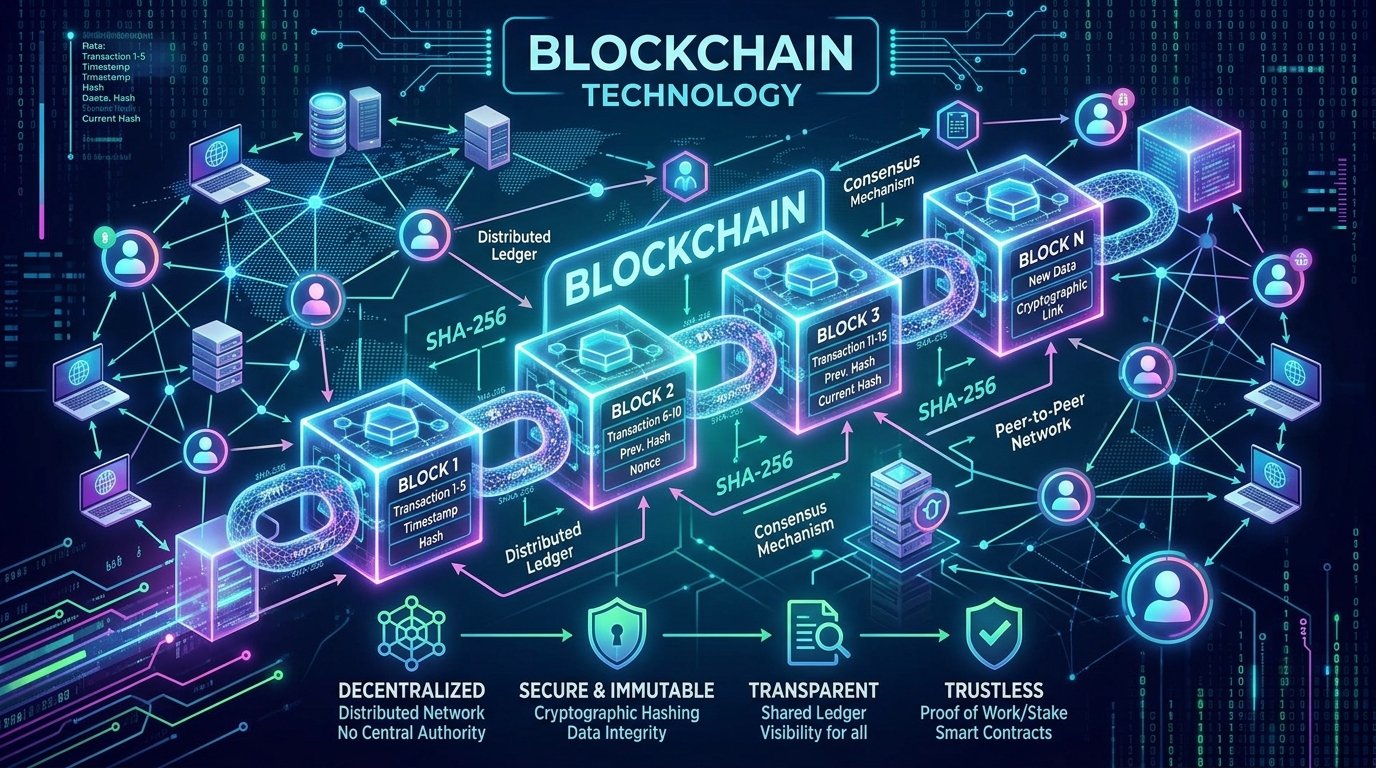
Blockchain Technology is a decentralized digital ledger system that records transactions in secure, immutable blocks distributed across a network of computers. It ensures transparency, tamper resistance, and eliminates the need for centralized intermediaries.
2. How is blockchain being used in traditional finance?
In 2026, blockchain is used to tokenize assets, improve settlement efficiency, enable 24/7 payments, and support institutional investment products like tokenized securities and crypto ETFs.
3. What are some real‑world applications of blockchain beyond cryptocurrency?
Beyond crypto, blockchain powers supply chain traceability, digital identity systems, ESG reporting, IoT security frameworks, and decentralized governance models.
4. What challenges does blockchain face today?
The main challenges include regulatory uncertainty, network scalability issues, interoperability hurdles, and evolving security concerns — particularly with advancements in quantum computing.
5. Why is blockchain important for future digital systems?
Blockchain’s transparency, security, and decentralized architecture make it foundational for next‑generation financial infrastructure, digital transactions, automated contracts, and trustless ecosystems across industries.