Blockchain Technology: Future of Digital Trust
As we step into February 2026, blockchain technology continues to redefine how digital systems operate, offering unprecedented transparency, security, and decentralization. What started as the underlying technology behind cryptocurrencies has now evolved into a transformative force impacting industries ranging from finance and healthcare to supply chains and governance.
Blockchain technology is no longer a futuristic concept—it is a present-day reality shaping how businesses build trust and efficiency in a digital-first world. With increasing concerns over data privacy, cyber threats, and centralized control, blockchain technology provides a solution that distributes authority and ensures data integrity.In this article, we will explore the fundamentals of blockchain technology, its key features, real-world applications, benefits, challenges, and its future outlook in 2026 and beyond.
What is Blockchain Technology?
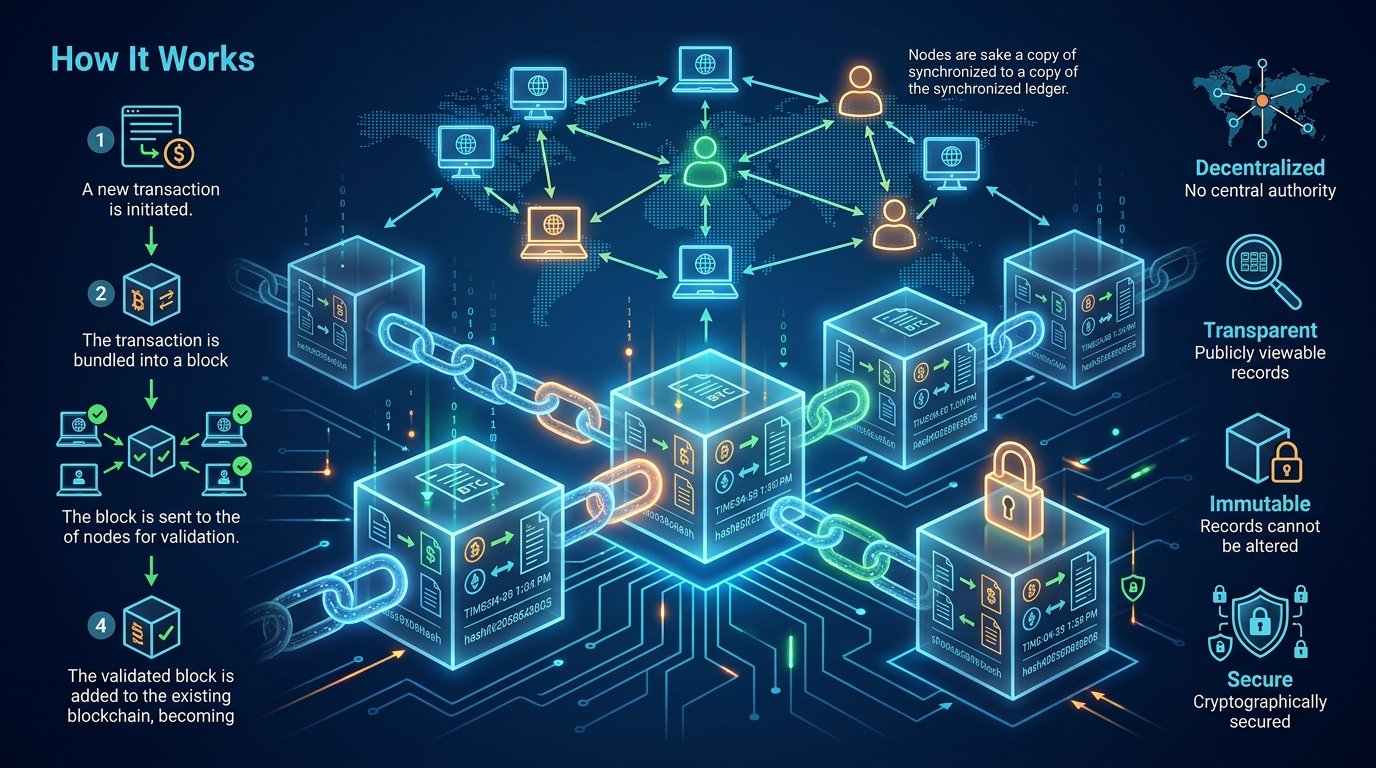
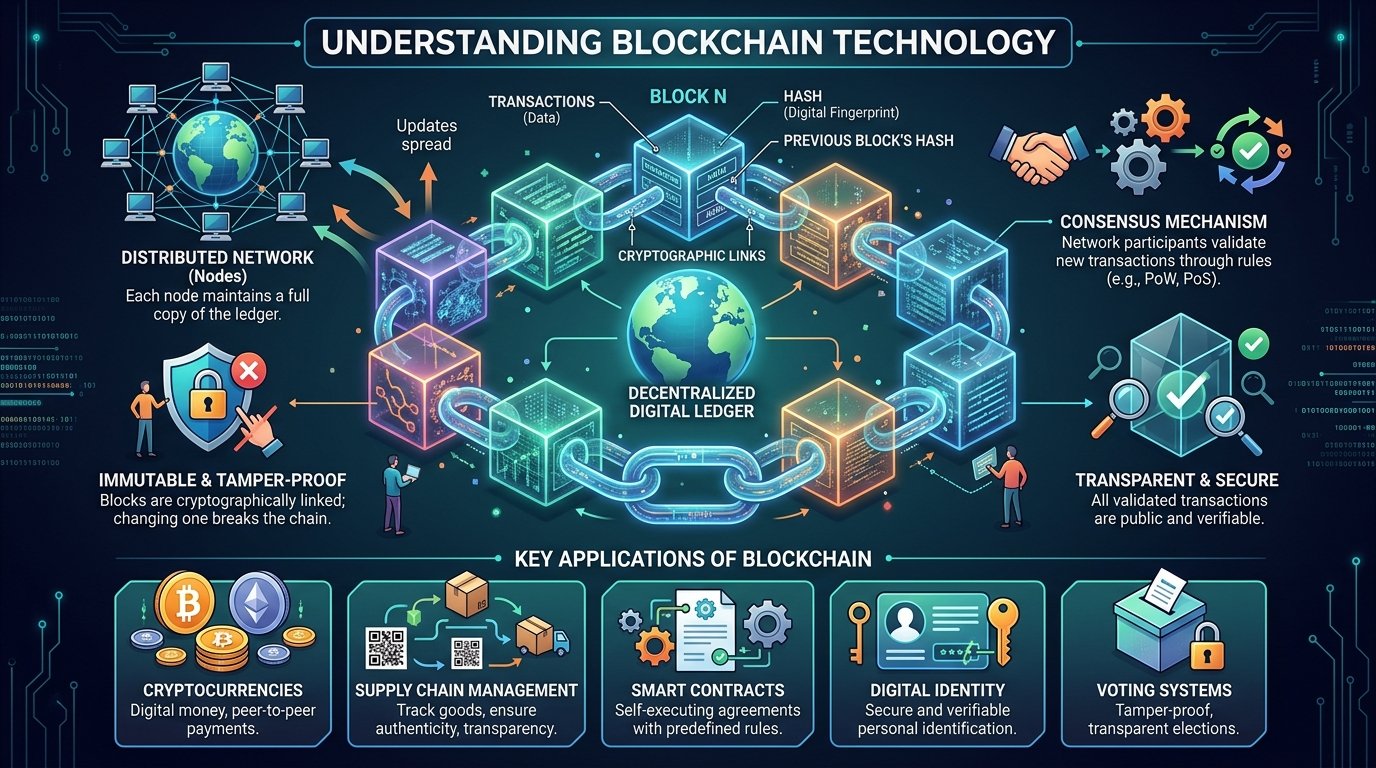
Blockchain technology is a decentralized digital ledger system that records transactions across multiple computers in a secure and transparent manner. Unlike traditional databases that rely on a central authority, blockchain technology distributes data across a network of nodes, ensuring that no single entity has complete control.Each transaction is grouped into a block, and these blocks are linked together in chronological order, forming a chain. Once a block is added to the chain, it becomes nearly impossible to alter, making blockchain technology highly secure and tamper-resistant.
This structure ensures that every participant in the network has access to the same information, fostering trust without the need for intermediaries. Blockchain technology is the backbone of cryptocurrencies, but its applications extend far beyond digital currencies.
Key Features of Blockchain Technology
Decentralization
One of the defining characteristics of blockchain technology is decentralization. Traditional systems rely on centralized authorities such as banks or governments to validate transactions. In contrast, blockchain technology distributes control across a network, reducing the risk of manipulation and single points of failure.
Transparency
Blockchain technology allows all participants in the network to view transaction data. This transparency builds trust among users and ensures accountability. Every transaction is recorded permanently and can be audited at any time.
Security
Security is a core strength of blockchain technology. Transactions are encrypted using advanced cryptographic techniques, making it extremely difficult for hackers to alter data. Additionally, consensus mechanisms ensure that only valid transactions are added to the blockchain.
Immutability
Once data is recorded on the blockchain, it cannot be changed or deleted. This immutability ensures data integrity and prevents fraud, making blockchain technology ideal for sensitive applications such as financial transactions and record-keeping.
How Blockchain Technology Works
Blockchain technology operates through a combination of cryptography, distributed networks, and consensus algorithms. When a transaction is initiated, it is broadcast to a network of nodes. These nodes validate the transaction using predefined rules.
Once validated, the transaction is grouped with others into a block. This block is then added to the existing chain through a consensus mechanism such as Proof of Work or Proof of Stake.Each block contains a unique hash, along with the hash of the previous block, creating a secure and interconnected chain. This design ensures that altering one block would require changing all subsequent blocks, which is practically impossible in a large network.
Applications of Blockchain Technology

Financial Services
Blockchain technology has revolutionized the financial sector by enabling faster, cheaper, and more secure transactions. It eliminates the need for intermediaries, reducing costs and processing times. Cross-border payments, remittances, and digital currencies are all powered by blockchain technology.
Supply Chain Management
In supply chains, blockchain technology provides end-to-end visibility. Companies can track products from origin to destination, ensuring authenticity and reducing fraud. This is particularly useful in industries like food, pharmaceuticals, and luxury goods.
Healthcare
Blockchain technology enhances data security and interoperability in healthcare. Patient records can be stored securely and shared among authorized parties, improving efficiency and reducing errors. It also helps in tracking pharmaceuticals and preventing counterfeit drugs.
Real Estate
Property transactions often involve complex processes and multiple intermediaries. Blockchain technology simplifies these transactions by providing a transparent and secure platform for recording ownership and transferring assets.
Voting Systems
Blockchain technology can improve the integrity of voting systems by ensuring transparency and preventing tampering. Each vote is recorded securely, making the process more trustworthy and efficient.
Benefits of Blockchain Technology
Enhanced Security
Blockchain technology provides a high level of security through encryption and decentralization. This reduces the risk of data breaches and cyberattacks.
Increased Efficiency
By eliminating intermediaries and automating processes, blockchain technology increases efficiency and reduces operational costs. Transactions can be completed faster compared to traditional systems.
Improved Transparency
Transparency is a major advantage of blockchain technology. All participants have access to the same data, which promotes trust and accountability.
Cost Reduction
Blockchain technology reduces costs by removing the need for intermediaries and streamlining processes. This is especially beneficial in industries with complex workflows.
Challenges of Blockchain Technology
Scalability Issues
One of the major challenges of blockchain technology is scalability. As the number of transactions increases, the network can become slower and less efficient.
Regulatory Uncertainty
Blockchain technology operates in a rapidly evolving regulatory environment. Governments around the world are still developing frameworks to govern its use, which can create uncertainty for businesses.
Energy Consumption
Some blockchain networks, particularly those using Proof of Work, consume significant amounts of energy. This has raised concerns about environmental impact.
Adoption Barriers
Despite its potential, blockchain technology faces challenges in adoption. Lack of awareness, technical complexity, and resistance to change can hinder its widespread implementation.
Applications of Blockchain Technology

As of February 2026, blockchain technology is entering a new phase of maturity. Innovations such as Layer 2 solutions, interoperability protocols, and energy-efficient consensus mechanisms are addressing many of the existing challenges.
Businesses are increasingly integrating blockchain technology into their operations, recognizing its potential to enhance security and efficiency. Governments are also exploring its use in public services, identity management, and digital currencies.
The rise of decentralized finance (DeFi), non-fungible tokens (NFTs), and Web3 applications is further expanding the scope of blockchain technology. These developments are creating new opportunities for innovation and economic growth.In the coming years, blockchain technology is expected to become a foundational element of the digital economy, enabling secure and transparent interactions across various sectors.
Conclusion
Blockchain technology has emerged as one of the most transformative innovations of the digital age. Its ability to provide security, transparency, and decentralization makes it a powerful tool for addressing many of the challenges faced by traditional systems.
As we move further into 2026, blockchain technology is poised to play an even greater role in shaping the future of industries and digital interactions. While challenges remain, ongoing advancements and increasing adoption indicate a promising future.Understanding blockchain technology is essential for businesses, professionals, and individuals who want to stay ahead in a rapidly evolving digital landscape.
FAQs
1. What is blockchain technology in simple terms?
Blockchain technology is a digital system that records transactions securely across multiple computers, ensuring transparency and preventing data tampering.
2. How is blockchain technology used in real life?
Blockchain technology is used in finance, healthcare, supply chains, real estate, and voting systems to improve security, transparency, and efficiency.
3. Is blockchain technology secure?
Yes, blockchain technology is highly secure due to its decentralized nature and advanced cryptographic techniques, making it difficult to hack or alter data.
4. What are the main advantages of blockchain technology?
The main advantages include enhanced security, improved transparency, increased efficiency, and reduced costs.
5. What is the future of blockchain technology?
The future of blockchain technology looks promising, with growing adoption in various industries and continuous advancements addressing current challenges.



1 comment