
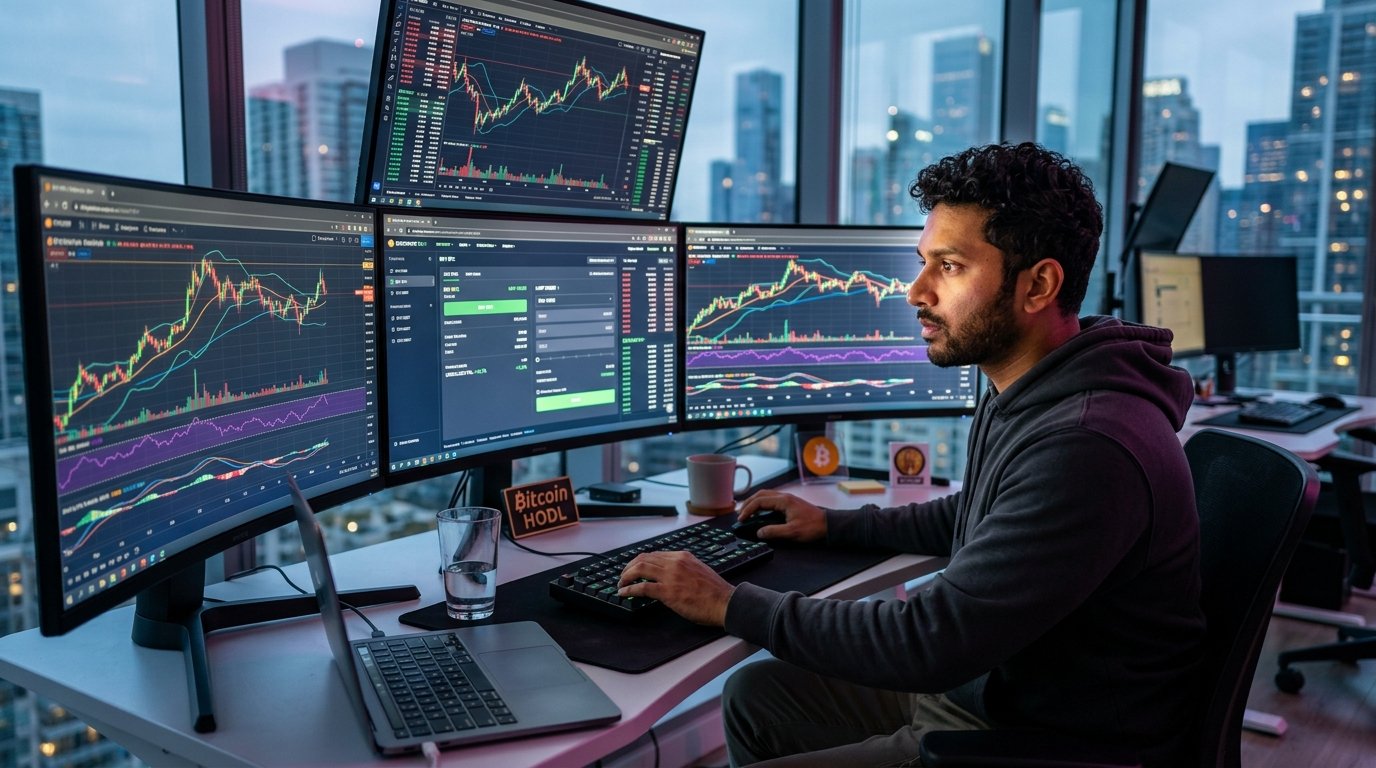
Crypto trading has grown from a niche financial activity into a dynamic, high-stakes global market. By February 2026, digital assets have become increasingly integrated into mainstream investment portfolios, and individual traders are seeking advanced strategies to navigate rapidly evolving trends. Crypto trading involves buying and selling cryptocurrencies such as Bitcoin, Ethereum, and emerging altcoins with the goal of making a profit. Unlike traditional stock markets, the cryptocurrency market operates 24/7, offering unparalleled flexibility but also exposing traders to high volatility and risk. As a result, understanding the fundamentals of crypto trading, from market behavior to strategic risk management, is essential for anyone looking to succeed in this space.
In this comprehensive guide, we will explore the essential concepts of crypto trading, examine the latest trends influencing the market in 2026, and provide actionable strategies for both novice and experienced traders. Whether you are just starting or aiming to refine your trading approach, this article will equip you with the knowledge needed to make informed decisions and navigate the complex world of digital asset markets.
What is Crypto Trading?
A New Frontier in Financial Markets
Crypto trading refers to the process of buying and selling digital currencies on exchanges with the intent of generating profits. These markets emerged in 2009 with the launch of Bitcoin and have since expanded to include thousands of cryptocurrencies. Unlike traditional assets such as stocks or bonds, cryptocurrencies are decentralized, operate on blockchain technology, and are not governed by a central authority. This decentralization introduces unique dynamics to crypto trading, making it distinct from other financial markets.
Digital assets can be traded on a variety of platforms, including centralized exchanges, decentralized exchanges, and peer-to-peer markets. Traders can take advantage of price fluctuations in real time, and many use advanced tools and technical analysis to anticipate market movements. The appeal of crypto trading lies in its potential for high returns and the opportunity to participate in innovative technologies reshaping finance, such as decentralized finance (DeFi) and non-fungible tokens (NFTs).
Why Crypto Trading Matters in 2026
By 2026, crypto trading has matured with increased regulatory clarity and institutional participation. Major financial institutions now offer crypto derivatives, and several governments have developed frameworks to govern digital asset markets. This evolution has brought more liquidity and legitimacy to crypto trading, but it has also intensified competition. Traders today must not only understand price charts but also global economic indicators, regulatory changes, and technological advancements that influence market sentiment and asset valuations.
Market Types in Crypto Trading
Spot Trading: Buying and Selling Digital Assets
Spot trading is the most straightforward form of crypto trading. It involves purchasing a digital asset at its current market price and holding it in a digital wallet. When the price increases, traders can sell their holdings for a profit. Spot markets are ideal for beginners because they require less technical expertise and do not involve leverage. Spot trading allows traders to accumulate cryptocurrencies they believe will appreciate over time, offering exposure to long-term growth potential.
Margin Trading: Amplifying Potential Gains
Margin trading allows traders to borrow funds to increase their trading position. This strategy can amplify profits, as traders can control larger amounts of cryptocurrency than their initial investment would normally allow. However, with greater leverage comes increased risk. If the market moves against the trader’s position, losses can exceed the initial investment, and margin calls may require additional funds to maintain open positions. Margin trading is recommended for experienced traders who understand risk management principles and have a clear strategy.
Futures and Derivatives: Betting on Price Direction
Futures contracts and other derivatives allow traders to speculate on the future price of cryptocurrencies without owning the underlying assets. These financial instruments can be used to hedge risk or to profit from both rising and falling markets. In 2026, crypto futures markets have become highly liquid, offering a wide range of contract types with different expiration dates and leverage options. Derivatives trading requires a deep understanding of market dynamics, contract specifications, and careful risk controls to avoid significant losses.
Core Strategies for Successful Crypto Trading
Technical Analysis: Reading the Market’s Pulse
Technical analysis is the backbone of many crypto trading strategies. It involves studying historical price charts and trading volumes to identify patterns and trends that may predict future price movements. Key concepts include support and resistance levels, moving averages, and momentum indicators. For example, when a cryptocurrency’s price repeatedly fails to break through a specific resistance level, traders may interpret this as a signal to sell or reduce their positions.
Candlestick charts are also widely used in technical analysis because they display opening, closing, high, and low prices for specific time intervals. By examining candlestick formations, traders can identify bullish or bearish sentiment. Mastering technical analysis requires practice and the ability to interpret data objectively, without emotional bias.
Fundamental Analysis: Evaluating the Big Picture
While technical analysis focuses on price trends, fundamental analysis looks at underlying factors that influence long-term value. This includes an asset’s technological foundation, developer activity, adoption rates, and macroeconomic influences. For instance, a cryptocurrency supported by a strong development community and real-world use cases is often viewed as a more resilient investment.
In 2026, traders increasingly consider regulatory developments, partnerships with major corporations, and updates to blockchain protocols as part of their fundamental analysis. These factors can have profound effects on market sentiment and price behavior.
Sentiment Analysis: Gauging Market Psychology
Sentiment analysis involves interpreting public perception and broader market mood. Traders use news, social media trends, and community discussions to assess whether traders are optimistic or fearful. Bullish sentiment can drive prices higher, while fear and uncertainty often lead to sell-offs. Advanced sentiment analysis tools aggregate social media posts and news articles to provide a real-time gauge of market psychology, helping traders make more informed decisions.
Risk Management: Protecting Your Capital

The Importance of Risk Management in Crypto Trading
Crypto trading carries inherent risks due to market volatility and rapid price swings. Effective risk management is essential to preserve capital and survive long-term trading. Traders must understand that losses are inevitable, and the goal is to ensure those losses do not outweigh the gains.
One fundamental risk management practice is position sizing, which involves calculating the amount of capital to allocate to each trade based on risk tolerance. Traders should avoid allocating large portions of their portfolio to a single trade, especially in highly volatile conditions. Diversification across different assets and strategies can also reduce overall risk exposure.
Setting Stop-Loss and Take-Profit Orders
Stop-loss orders are automatic instructions to sell a cryptocurrency when it reaches a specific price, limiting potential losses. Take-profit orders work similarly but are designed to secure profits once an asset reaches a predetermined price. These tools help traders execute disciplined strategies and reduce emotional decision-making.
In 2026, algorithmic trading bots are commonly used to place stop-loss and take-profit orders, enabling traders to manage multiple positions simultaneously and respond quickly to market changes. Automation reduces the risk of human error and ensures trades align with predefined strategies.
Psychological Resilience and Disciplined Trading
Trading psychology plays a crucial role in crypto trading success. Fear, greed, and overconfidence can lead to impulsive decisions that undermine well-planned strategies. Successful traders cultivate psychological resilience, learning to remain calm during market turbulence and to stick to their trading plans.
Developing a trading journal can help traders reflect on their decisions, understand their emotional triggers, and improve their future performance. A disciplined approach separates profitable traders from those who suffer repeated losses.
Tools and Platforms for Crypto Trading
Choosing the Right Exchange
Selecting a reliable exchange is a foundational decision in crypto trading. Leading exchanges offer high liquidity, robust security measures, and user-friendly interfaces. In 2026, traders expect exchanges to support advanced trading features, such as customizable charting tools, real-time data feeds, and access to a wide range of digital assets.
Security is paramount, as exchanges are frequent targets for hacking attempts. Traders should prioritize platforms with strong track records, transparent operational practices, and insurance coverage for digital assets.
Trading Bots and Automated Strategies
Automated trading bots have become indispensable tools for many crypto traders. These bots execute trades based on predefined criteria, allowing traders to capitalize on market opportunities without constant manual oversight. Bots can implement complex strategies such as arbitrage, trend following, and mean reversion, which may be difficult to execute manually.
While automated tools can enhance efficiency, traders must monitor bot performance and adjust algorithms as market conditions evolve. Overreliance on automation without understanding underlying strategies can lead to unexpected losses.
Portfolio Tracking and Analytics Tools
Comprehensive portfolio tracking tools help traders monitor asset performance, assess risk exposure, and make data-driven decisions. These analytics platforms consolidate data from multiple exchanges and wallets, providing a unified view of a trader’s holdings and performance metrics.
Advanced analytics tools also offer performance benchmarks, tax reporting features, and predictive insights, making them valuable assets for both individual traders and institutional investors.
Staying Ahead of Trends in Crypto Trading

The Rise of AI and Machine Learning
Artificial intelligence (AI) and machine learning are transforming crypto trading. These technologies analyze vast datasets to identify patterns and generate predictive models. Traders and institutions increasingly rely on AI-powered tools to enhance their decision-making and automate complex analyses.
AI-driven sentiment analysis, market forecasting, and risk assessment are becoming standard components of sophisticated trading systems. As AI integration deepens, traders armed with these tools may gain a competitive edge in fast-moving markets.
Regulatory Developments and Market Impact
Regulation continues to shape the crypto trading landscape. Governments worldwide are crafting policies to address investor protection, tax compliance, and market stability. Regulatory clarity can boost institutional participation, increase liquidity, and reduce market manipulation. However, restrictive policies may also limit access for retail traders or impose compliance burdens.
Staying informed about regulatory developments is critical for crypto traders. Understanding how new laws and guidelines affect specific assets or markets can help traders anticipate shifts in market behavior and adjust their strategies accordingly.
The Role of Decentralized Finance (DeFi)
Decentralized finance has introduced new opportunities for yield generation and liquidity provision. DeFi platforms enable traders to stake assets, provide liquidity, and earn rewards without traditional intermediaries. These innovations have expanded the utility of cryptocurrencies beyond simple trading, offering diversified income streams.
DeFi protocols also introduce unique risks, such as smart contract vulnerabilities and impermanent loss. Traders interested in DeFi must conduct thorough research and understand the mechanisms behind each protocol before committing capital.
Conclusion
Crypto trading in February 2026 presents both exciting opportunities and significant challenges. As digital assets continue to mature, successful traders must master a blend of technical analysis, fundamental research, and disciplined risk management. Understanding market types, leveraging advanced tools, and staying ahead of emerging trends will help traders navigate volatility and position themselves for long-term growth.
While the potential for profit is high, so too are the risks. A thoughtful, informed approach—grounded in strategy and psychological resilience—will serve traders well in this dynamic and evolving market. Whether you are a beginner or an experienced trader, continuous learning and adaptability remain key to thriving in the world of crypto trading.
Frequently Asked Questions (FAQs)
1. What is the best strategy for crypto trading beginners?
For beginners, starting with spot trading and learning basic technical analysis techniques is often recommended. New traders should focus on understanding market fundamentals, practicing risk management, and avoiding leverage until they gain experience.
2. Does crypto trading require advanced technical tools?
While advanced tools can enhance analysis, they are not strictly necessary. Beginners can start with basic charting platforms and gradually adopt more sophisticated tools as they gain confidence and expertise.
3. How much capital do I need to start crypto trading?
There is no fixed amount required to start crypto trading. Traders should only invest capital they can afford to lose, as markets can be unpredictable. Starting with a small amount and scaling up as experience grows is a prudent approach.
4. Can automated bots improve my crypto trading performance?
Automated bots can help execute trades based on predefined criteria and reduce manual effort. However, bots are only as good as the strategies they implement, and traders should monitor performance and adjust algorithms as needed.
5. How do I manage risk in crypto trading?
Effective risk management involves setting stop-loss orders, diversifying your portfolio, sizing positions appropriately, and maintaining psychological discipline. Understanding and accepting losses as part of the trading process helps preserve capital over time.



One thought on “Crypto Trading Mastery: Strategies for February 2026”